


Disclosure Day

Film
Steven Spielberg seems pretty sure that life exists out there in the universe. Check that, intelligent life. He doesn't strike me as the kind of guy, based on his filmography, that wastes too much time toiling thinking about the Fermi Paradox. The idea that the universe is infinite yet no definitive proof of intelligent life outside Earth exists doesn't rattle Spielberg, because he seems certain of life out there. Actually, it seems his quandaries don't lie in the existential questions of aliens, they once did back in his Close Encounters days, but with Disclosure Day, Spielberg and writer David Koepp wrestle with the bureaucratic hurdles surrounding humanity's collective knowledge of extra terrestrial existence. Centered around ideas of morality, religion, and what humankind's true place is in the universe, the Jurassic Park duo's latest film is an interesting dissertation filled with stunning technical finesse and an incredible cast, yet an inexplicably clunky script derails an otherwise gorgeous experience.
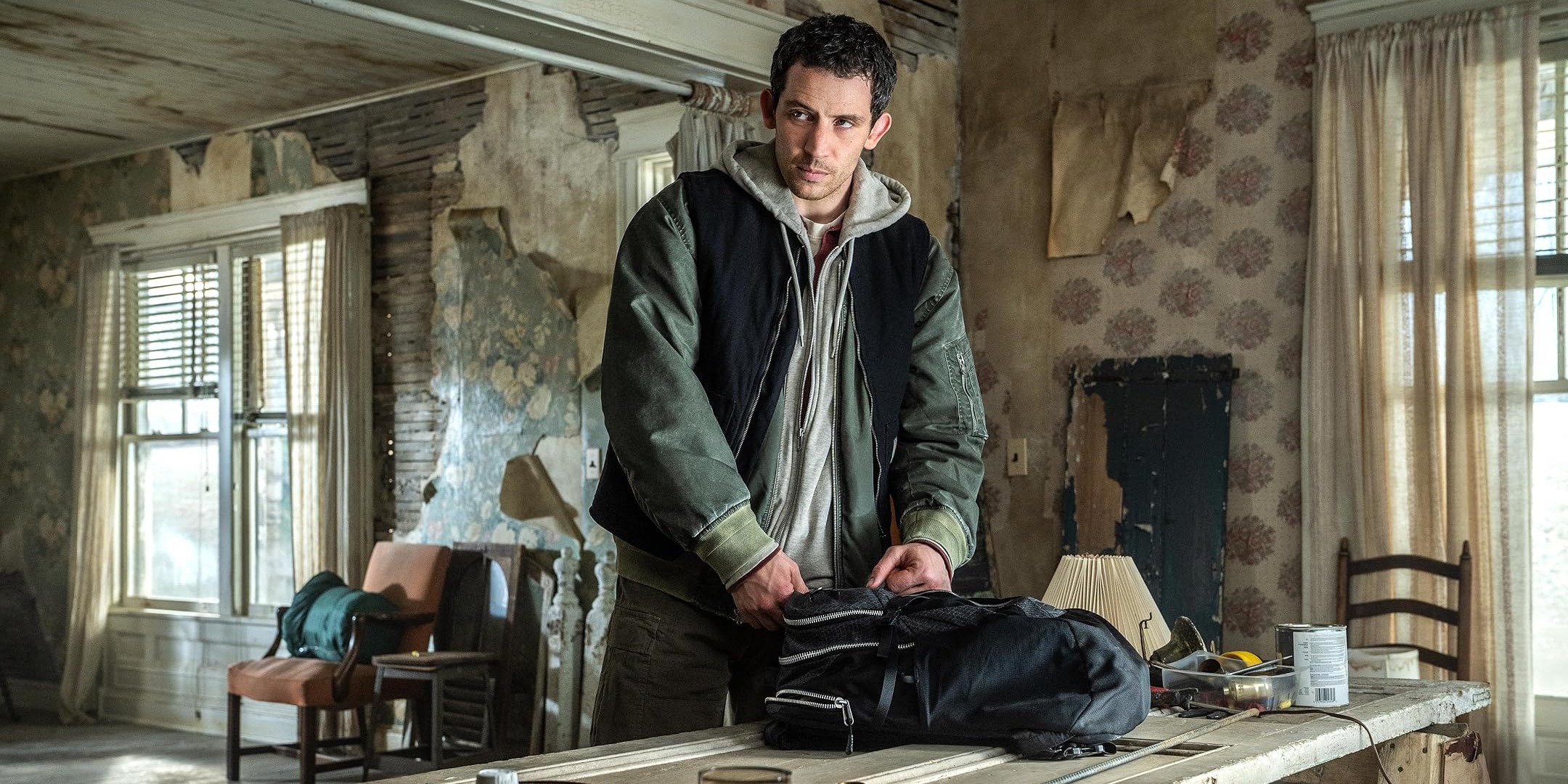
Designed as an extended, yet mostly passive, chase sequence, Disclosure Day centers on Daniel Kellner (Josh O'Connor), a whistleblower at a company called WARDEX who is in possession of mysterious and highly sought-after information. The constant motion of O'Connor's Kellner, rescuing his girlfriend Jane (Eve Hewson) from his seedy employer Noah Scanlon (Colin Firth) and their ensuing Bonnie and Clyde escape routine, makes for a frantic pace. Yet, the film never feels rushed, evoking a sense of duality between a well-paced film and a story that grinds against a deadline, making for a rather thrilling viewing.
All of which I can attribute to the direction and technicality we've come to expect from Spielberg films. Sensational composition, every frame rich with mirror and window tricks and reflections, varied angles and rotations of the camera make for deliriously vivid entertainment. If there's ever one thing you can count on with Spielberg's films, it's that you will be wholly entertained, and your eyes will be treated with frames that could be singular pieces of art. Now, I wasn't as sure about Janusz Kaminski's cinematography, given how his partnership with Spielberg has looked in the past. Their collaborations, while mostly terrific films, have presented a glossy sheen to the picture that has almost made scenes look too manufactured. The Fabelmans, West Side Story, and especially Ready Player One are but a few examples, but Disclosure Day was a refreshing respite. Kaminski's work feels much more grounded, delivering a softer vision that elevated the essence of frail humanity through the story.
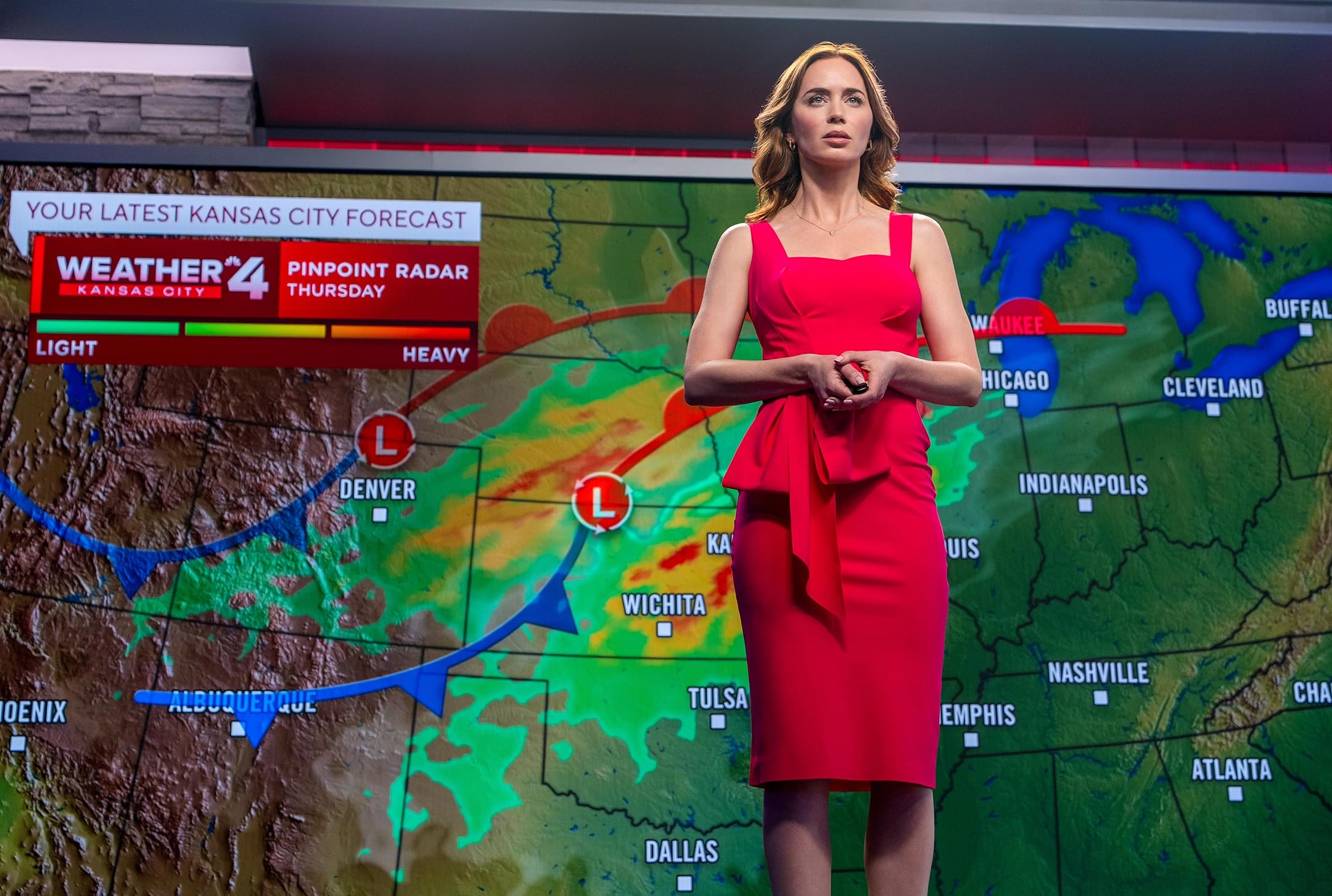
Opposite of O'Connor's Kellner is Margaret Fairchild, played by an incredible Emily Blunt, a Kansas City meteorologist who suddenly gains a sort of supernatural level of knowledge, an event triggered by a strange interaction with a cardinal. These supernatural or extra terrestrial powers and occurrences are often underexplained or not explained at all, and as someone that detests an exposition dump I found it to be a welcome treat. The suspenseful unfolding of Kellner and Fairchild's connection, even if confusing at times, is paced well enough to keep you enthralled. All the while Kellner executes his whistleblower escape plan and Fairchild is suddenly fluent in Russian and Korean, another mysterious WARDEX defector named Hugo Wakefield (Colman Domingo) instructs the duo over the phone like a stage director while he's literally building a set on a stage. Presenting a protagonist puppeteering trick adds to the mystique of Koepp's screenplay, which along with the trio's chemistry, frantic emotions and confusion, roots the overhanging "threat" of aliens in the very humanity on screen. We aren't fixated on the idea of aliens bequeathing these two unsuspecting people powers (these aren't Marvel superpowers or anything outlandish in that regard) but in their shared experiences, struggles, and desire to let everyone in on the life altering secrets.
I may have labeled the film as an extended chase sequence but it isn't all high-octane action and thrills, as Disclosure Day is more of a debate film about how to handle these secrets. But it's accomplished through multiple viewpoints, and dare I say, arguments. Kellner's girlfriend Jane was once a nun and plays a pivotal role in an examination of how discovering extra-terrestrial existence challenges religious ideals. While she is a prescribed Christian, the overarching questions posed by Jane are theologically abstract and apply to every faith. Would aliens be considered godly creatures and change the religious world order? Or are they mere creations of the very same god and should be considered equal? They may seem like absurd questions read on a screen, but the work of Hewson in her spiritual exploration worked wonders. Layered with the very Arrival-coded background noise of Russia and North Korea's combative actions sparking a soon-to-occur World War 3 raises a central moral conflict. As opposed to deities influencing humanity's actions or emotions, how should we as people interact with this knowledge. Are universal-truths, such as hard evidence of the existence of intelligent life outside of Earth, "public property" and should be shared as such? Or would such a shock to humanity further destabilize an already rocky foundation? Evidently Spielberg and Koepp have a firm grasp on the chaotic world we exist in today, and even if the overall idea of Disclosure Day can be a little hokey or corny, they're probably not far off in the belief that a world altering bit of news that affects us all equally could blow the planet up into pieces, or bring us all closer together. These are all interesting layers within Spielberg's gorgeously orchestrated film, delivering incredible emotional returns especially in a beautiful press sequence in the third act, yet Disclosure Day almost crumbles under its own lofty aspirations.
In fact, Koepp continues to baffle me with another beguiling screenplay. An uneven mix of skillful suspense building and wildly cartoonish buffoonery swings the tone of the film in inconceivably erratic ways. Firth's right-hand man being a sort of mystical heavy who possesses some of the corniest lines and actions while the weight of O'Connor and Blunt's "purpose" is so seemingly enormous felt more like a Saturday morning cartoon than a Spielberg sci-fi film. There's even an extended slapstick routine that overstays its welcome immediately, launching me out of the serious emotional moment unfolding.
Through all of Spielberg's stunning direction, John Williams' sensational score, and even beyond Koepp's perplexing decisions, lies the pièce de résistance of Disclosure Day, Blunt's career best performance. Balancing an almost comedic level of confusion, as one would have when they suddenly knew just about everything about everyone, and earnest emotion, Blunt commands the screen for every second she's on it. The gravitas that she brought in her role as Kitty Oppenheimer in Christopher Nolan's Oppenheimer returns again in Fairchild, but more restrained if not focused into a more prominent character. Some of Koepp's best writing is given to Fairchild, especially in the third act, but throughout the film she operates as a perfect on-screen partner to O'Connor's almost military-level straight-edge character.
Ultimately, I found Disclosure Day to be an interesting dissertation. A sort of on-screen debate behind the facade of a drop-dead gorgeously crafted Spielberg film, that somehow failed to conquer its own ironic construction. With a foundation as unstable as Koepp's writing, all of the glorious Spielberg magic in the world along with Emily Blunt's stellar performance can only get you so far. This is not to say, of course, that I didn't enjoy any of it, because I still found the film riveting and appropriate for the current times. I was just hoping, if not praying, for writing befit for the grandiose existentialism Spielberg was serving.
Froth
Let's just be honest here, there has to be some kind of space related beer pairing for this. I'm not trying to be kitschy, but when Steven Spielberg, one of the greatest filmmakers of our time, makes an original sci-fi film, you lean into it at least a little. So now let's all be thankful for Spielberg, and let's all be thankful for Australia. Why Australia, you ask? Because they are the creators of the Galaxy hop (and there's our space reference) and I'm lucky enough to be able to enjoy a Galaxy-centric West Coast IPA thanks to the island-country-continent and thanks to Lucky Envelope Brewing who made this lovely beverage. Galaxy's Back is Lucky Envelope's brew declaration of Hop Products Australia's latest and greatest batch of the hop, and is a delightfully crisp WCIPA that uses the hop's profile to its advantage. On the nose, Citra and Nelson operate as backup dancers to Galaxy's show, bringing floral and citrus lift to the bouquet. The flavor is where things really open up, filled with classic Galaxy notes like peach and a solid amount of citrus, giving the Galaxy's Back a profile that's punchy yet inviting. The bitterness is crisp and assertive as any self-respecting West Coast IPA should be, landing on a clean, dry finish that lets the hop character speak for itself. It tastes very similar to your classic run of the mill WCIPA but there's a lot more character to this specific mixture, a range of bright tropical-ness that pushes, if I may, the Lucky Envelope. Ok I'll be done with all the bad jokes, but I thoroughly enjoyed the Galaxy's Back and would love to see more of Galaxy hops across the WCIPA's out here or even some dry-hoppings could be a lot of fun.


