


Amrum - SIFF [2026]


Film
This film was viewed at the 52nd Seattle International Film Festival
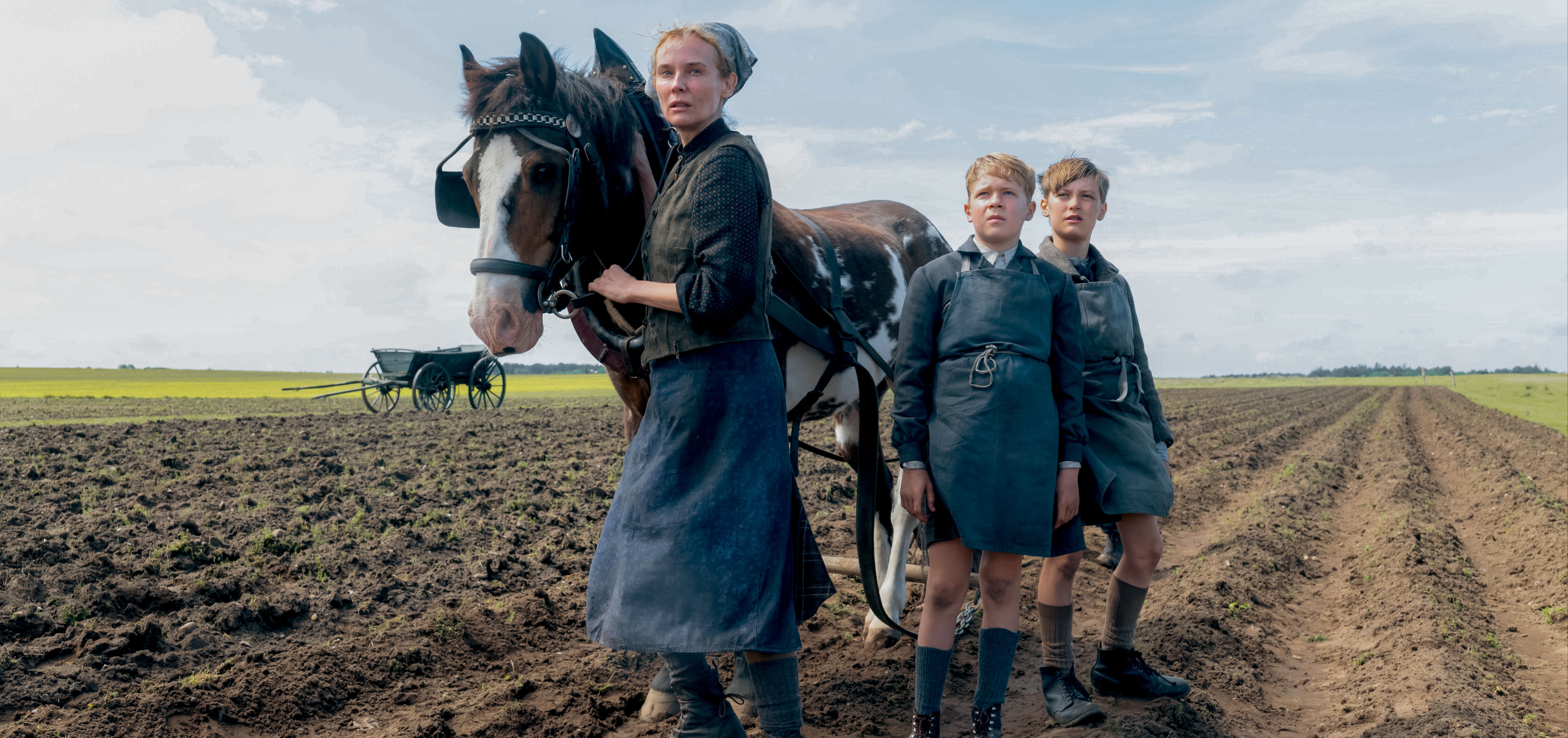
Off the North German Sea coast, in the North Friesian Islands, lies the tiny beach-laden island of Amrum. Filled with sandy dunes, mudflats stretching between neighboring isles during low-tide, and a seafaring lifestyle that extends to the Friesian origins, the island's visual beauty is a simple and bucolic vision. Fatih Akin's latest film, Amrum, is named after its locale and shares the same visual identity of the remote island. At times looking like it was shot on the edge of the world, the desolate poetry in which Akin operates is a slow-moving and soul-baring portrait of a twelve-year-old boy's simple journey for his mother's affection in the waning days of World War II. It makes for a gorgeous viewing experience and a stirring experiment on family ties and morality in our youth.
Amrum, while a wartime story, never features any real war. Similar to Martin McDonagh's The Banshees of Inisherin, the remote island the film is set in is on the peripheral of any actual wartime action. Yet Nanning (Jasper Billerbeck), the young boy whose perspective the film follows, and his family are affected directly by the outcomes of the war, being displaced from their Hamburg home to the island of Amrum. He even hears Tessa (Diane Kruger), the farmer he helps in his spare time, mention that the war is almost over. Excited to have his Nazi officer father return home, Nanning shares the thrilling news with his mother Hille (Laura Tonke) who is less than happy to hear anything suggesting Germany's defeat. The misunderstanding from Nanning is a simple misstep that sets into motion the odyssey he endures to provide for his mother once she has a newborn baby and the full coming-of-age thematics of Akin's island drama.
Even though Amrum's story is straightforward, Nanning embarking on a journey to find white bread, butter and honey for Hille, all luxuries the island doesn't have during wartime, Akin employs Karl-Walter Lindenlaub's sensational eye as cinematographer. Lindenlaub shoots the film with such visual intrigue and beauty that it evolves into something much more nuanced than its coming-of-age bones. A full moonlight shot where Nanning collects driftwood in the water looks like a boy standing on the edge of the world, somehow seeming like he's right where he needs to be yet impossibly lost at the same time. It's stunning to look at and captures the real isolation of Amrum in beautiful detail.
The remoteness of the island also spells conflict between the Amrumers and who they claim to be "mainlanders" such as Nanning and his family. Beyond the distinction of ethnicities Akin makes the Nazi-loyal family the ones on the outskirts of civilized society on the island. Most of the citizens can't wait for the war to be over, and only Hille lets out a feral scream when the news of Hitler's death reaches Amrum. But what makes Akin's film so interesting is how this all is shared through Nanning's perspective. A boy bartering his way through the island, almost accidentally stumbling into more violence such as hunting, all the while garnering the ire of anti-fascist Amrumers who see him as a product of his Nazi parents more than an innocent child. In a world where Ari Aster is out here making wild films about the inherited guilt from parents, Akin's milder and grounded approach feels digestible and exceptionally well done.
Although Akin's film can be a bit slow and tedious at times, Amrum was able to capture my attention and heart, and Billerbeck's performance is the reason why. His work is excellent, using his youthful gaze and emotional stability to satisfy the demands of carrying a lead role. That Lindenlaub's cinematography is powerful enough to be a selling point all on its own speaks to just how much is working in Akin's favor here. Amrum is a quiet and unhurried film that earns every moment of stillness it asks you to sit with.
Froth
While on a recent visit to Fremont Brewing's beer garden, on a lovely day mind you, I was able to enjoy their Helles Lager on their side pull. Not only is the beer the perfect pairing with Akin's Amrum, both of which are visually stunning and enjoyable to sit and sip with, but the side pull added a luscious layer of smooth drinkability that made me come crawling back for more. Fremont Brewing's Helles Lager by itself is already an incredibly clean and easy drinking beer. Presenting a light appearance, effervescent texture, along with a soft and balanced bready flavor, the brew is a sensational pour on a hot summer day. Toss in the creamy foam head from the side pull, giving a greater smoothness to each sip and bringing the malty sweetness to the forefront of each taste, and well, you've got yourself quite the beverage.


![The Seoul Guardians - SIFF [2026]](https://images.ctfassets.net/f4exvld7r7c2/5Y78YLhRY0GqFMEXjJctbr/10ae05d795177d2ee7ea04ba6f137e9c/SeoulGuardians_KeyArt.png?w=400&h=200&q=50&fm=png)

![Marama - SIFF [2026]](https://images.ctfassets.net/f4exvld7r7c2/lBKDw8fJA5xo2tj0w4007/b559e8794778b9d72e40a02ccfe8c2e9/Marama_KeyArt.jpeg?w=400&h=200&fl=progressive&q=50&fm=jpg)


![Marama - SIFF [2026]](https://images.ctfassets.net/f4exvld7r7c2/4J4Wo3HLIwZP79KTe3riab/b891510cdac3774cdb4a7d3ea082f4f8/phantom_menace.jpg?w=600&h=401&fl=progressive&q=50&fm=jpg)