


Marama - SIFF [2026]

Film
This film was viewed at the 52nd Seattle International Film Festival
Mārama feels imbued with the personal emotions of writer/director Taratoa Stappard as his first feature film. Born in Aotearoa New Zealand and growing up in London, Stappard has retraced his steps with his gothic horror film, giving the titular Mārama (Ariana Osborne, but as Mary for the bulk of the film) the same path. Once she receives a note written by a mysterious man claiming to know her family (her mother has been absent from her life and her father unknown), Mary departs from Wellington, traveling to Victorian England to learn more of this stranger and her family. After falling ill on her expedition, she finds herself recovering in the vast estate of Nathaniel Cole (Toby Stephens) who apparently knows the man who sent her letter and subsequently asks her to be a governess to his 9-year-old granddaughter Anne (Evelyn Towersey). Mixed in a web of anti-colonial thematics and slow-burn gothic horror, Stappard gives Mary a powerful and cathartic story that can be tepid in its pacing and jarring in its editing, but ends with cataclysmic satisfaction and is filled with sharp twists. Making Stappard's personal story a solid feature debut, elevated by a tremendous lead performance.
Mary's initial journey to England is a touch underbaked. The mystery behind Mary's family, hence the purpose of the letter, is the likely cause. But we have such little information behind Mary's upbringing, only being given quick snippets of flashbacks or cuts to liminal spaces where she's joined by other mysterious Māori women, that her motivation for this trip is lacking. The cuts and flashbacks stretch the pacing of the first act more than I'd have liked, making the editing from Dan Kircher not exactly mysterious but confounding and erratic.
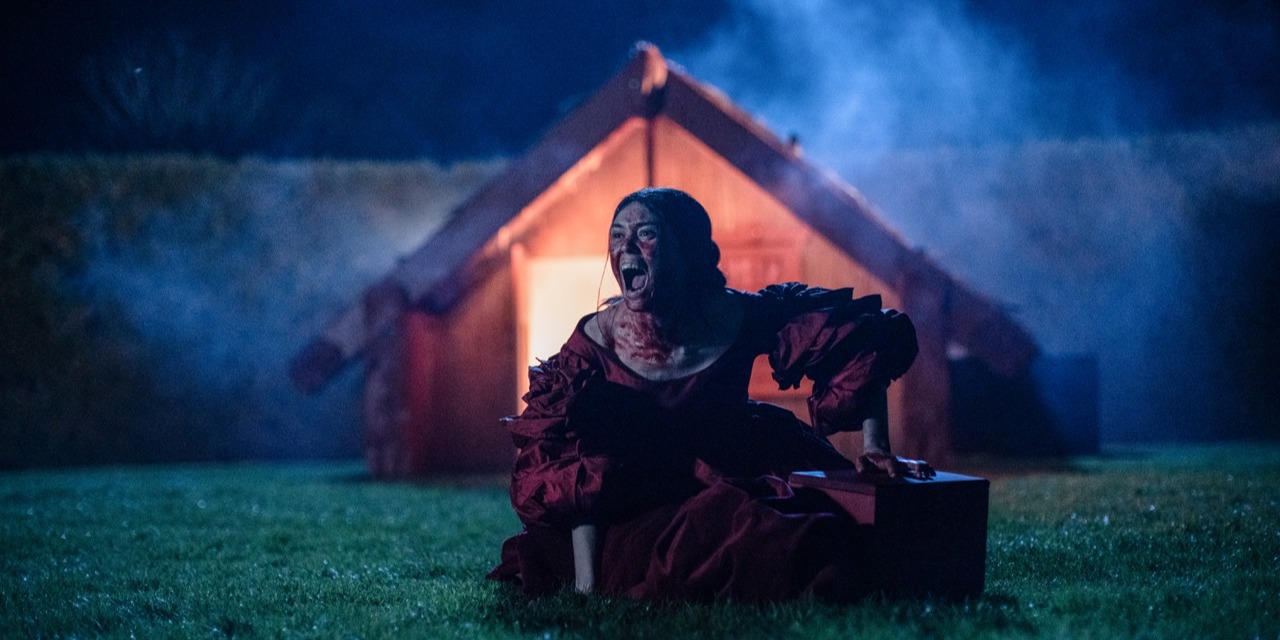
Once Mary is in the Cole home, a place with a shocking amount of Māori art including a full-sized wharenui (an ancestral Māori home) in his backyard as if it were a dollhouse for Anne, the puzzle pieces begin to take shape. Is Mary safe here? What's with Nathaniel's obsession and eventual fetishization with Māori culture? The intertwining cultural appropriation and anti-colonial statements from Stappard are sharp on their own, but with Osborne's towering performance as Mary, they evolve into much more powerful ideas. Mārama really takes full shape once Mary performs a form of Haka in sheer defiance of a vulgar display from Nathaniel's right-hand man Jack (Erroll Shand) where he's turned Māori culture into cocktail party entertainment.
The third act finds a satisfying culmination of events and puts the puzzle pieces neatly together. Even if they're all covered in blood. Osborne's performance continues to light a fire until the very end, and cinematographer Gin Loane delivers stunning visuals in support. Loane's cinematography goes so far as to almost provide an overexposed effect on the stellar landscapes during the daylight shots. Making an uneasy visual aesthetic that is a sly way to fit in more whitewashing.
While Mārama may be a somewhat erratic and undercooked film, its gothic story of revenge is an exceedingly entertaining and powerful watch. Osborne's performance is strong enough to power the film and Stappard's direction is steady in its high moments to provide exciting and twisted entertainment.
Froth
Now I usually like to pair something darker with my horror films, matching the ominous energy on-screen with dark roasty malts. A combination that has served me exceptionally well in the past. But with all of the red imagery in Mārama-fire, the wharenui, Mary's dress, and of course blood-it made more sense for an Amber. Lazy Boy Brewing's Amber is your classic, run of the mill, malt forward brew that balances a nice sweetness along the way. With a semi-transparent appearance its dark red hue suggests a more potent flavor profile than what's presented, but that doesn't mean it isn't enjoyable. It's a smooth drink that will definitely scratch the itch for any amber lovers out there.


