


You Can See Everything

Film
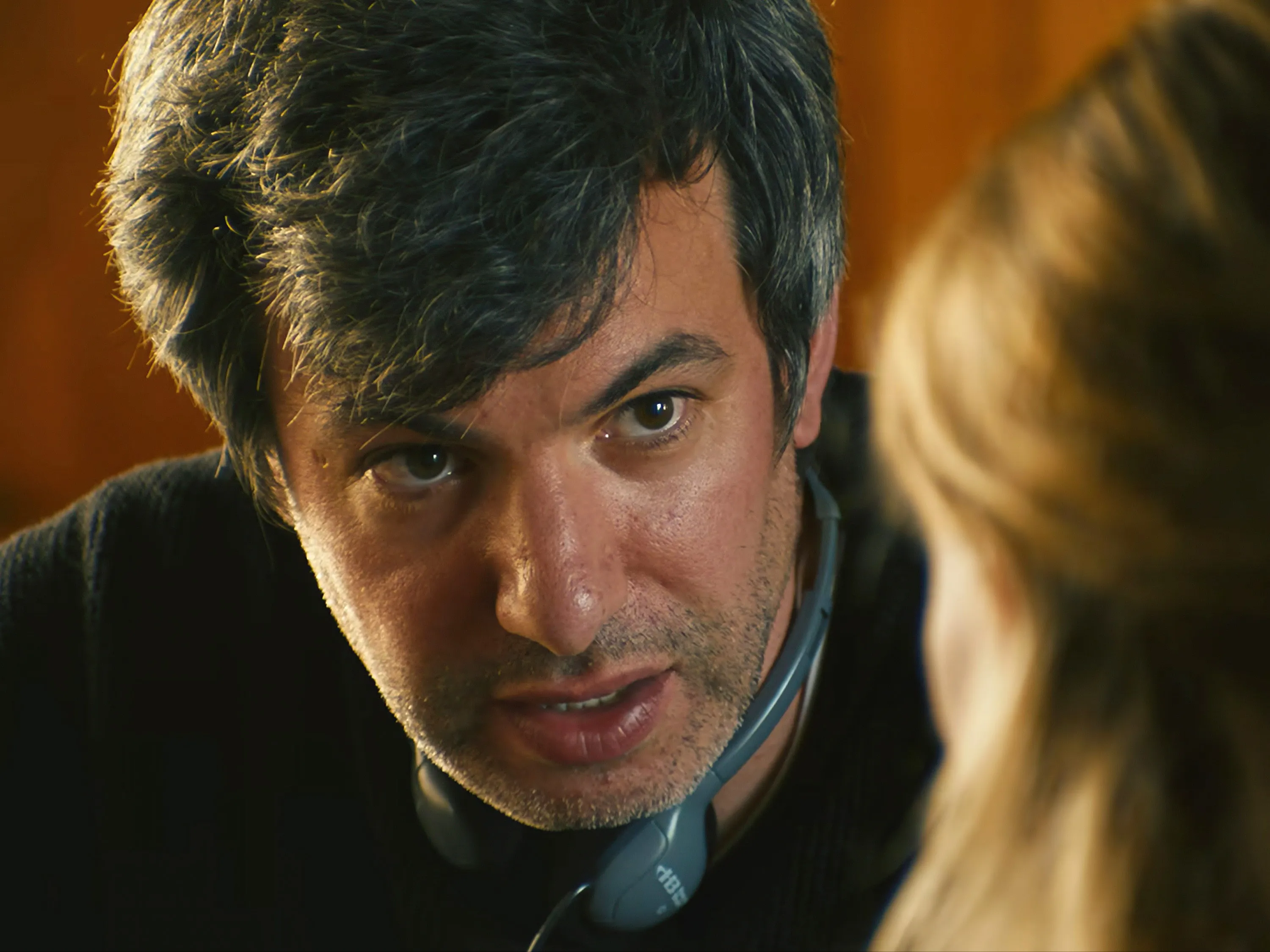
I, personally, don't think it's outlandish to say that we collectively were shook when the first trailer for You Can See Everything came out. All of a sudden, after years of wildly successful Nathan Fielder comedy shows such as Nathan For You, The Rehearsal, and most recently The Curse, we're led to believe that he was secretly working on a documentary with Lance Oppenheim? Let alone a no-holds-barred, behind-the-steel-curtain, intimate look at Elizabeth Holmes just mere days before she reports to prison for the Theranos fraud.
That's an absolute word salad, but take that in for just a moment. How insane is that?
Well now, Fielder and Oppenheim's documentary has become one of the buzziest titles coming out this year, and I, for one, am excited to say it delivers on its gobsmacking premise.
Holmes, and her romantic partner Billy Evans, allowing Fielder and Oppenheim's team unfettered access to their day-to-day lives presents a handful of intriguing opportunities. None more enthralling than the lavish cinematography from David Bolen. Gorgeously shot from top to bottom, Bolen's lens work captures such intensely intimate interactions between Holmes and Evans, with Fielder acting as a hilariously dubious fly on the wall. Especially in the first third, the doorway into the subjects' lives has never been opened wider. Fielder even addresses the elephant in the room within the first fifteen minutes, revealing his insecurities as a comedian allowed to lead this documentary project, pondering why Holmes and Evans would even agree to this. It's the first step in a wildly beguiling character study that begs to challenge who people on-screen are vs. their real-life counterparts, and quite frankly, there is no straight answer.
Plenty of time in You Can See Everything is spent on decoding Holmes' disenchantment with her representation in the Hulu show, The Dropout. The show starred Amanda Seyfried as Holmes, and showcases a caricature-esque version of her ascent to the Theranos throne and billions of fraudulent dollars. But what is an on-screen character, and what is real? It's such a confusing question to face in a documentary of all places, but Fielder drives the conversation there like a goddamn F1 driver, using speed and precision to navigate the unpredictably winding road of Holmes' persona. A New York Times article on the verge of being published quotes Holmes as admitting that Seyfried's role is merely a "character Holmes created", a quote that is also given substantial time on-screen for Holmes and Evans to actively try and refute. They claim to be a couple that records every interaction for safety, but refuse to elaborate or surface these recordings to Fielder, the guy they gave unrestricted access to their lives.
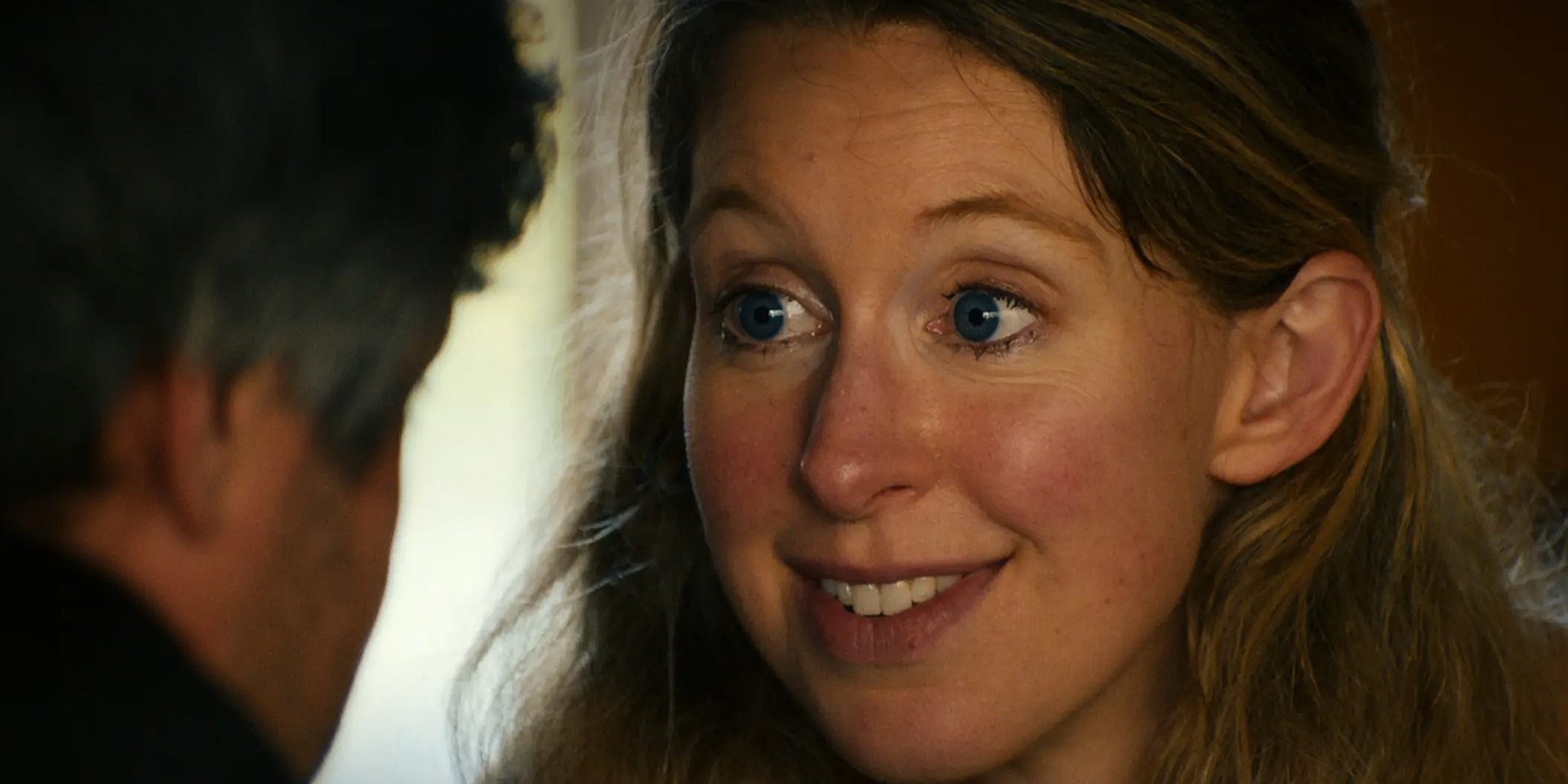
Back-and-forth moments between Fielder and Holmes and Evans are some of the most compelling psychological experiments of casual conversation you'll ever see on-screen. Most of which I think we can credit to Fielder's deadpan delivery, operating as a Trojan horse of awkward confidence. But the underlying threat of Holmes and Evans being somewhere on a spectrum from bat-shit insane to master manipulator (and yes, that is the range) turns this documentary into an almost cat-and-mouse game of who really means what. For instance, Holmes is being scrutinized for saying that the Theranos machine "can" run any test on a single drop of blood. A statement that leads to her fraud charges because it cannot. Her defense is that she doesn't understand the operative word "can" and the difference from "could", so Fielder shows her the famous Abbott and Costello bit "Who's on First?" A bit that Holmes doesn't understand a lick of, and Evans quickly claims it's because she's a genius whose mind just works differently.
As compelling as the Fielder and Holmes interviewee-to-subject chemistry is, she reports to prison mid-film, resulting in a shocking and turbulent shift in the film. The obscurity of Evans sharpens like a fresh razor, and slices through your mind like it was warm butter. Oppenheim and Fielder's ability to nimbly alter the trajectory of the film during these wildly chaotic moments, predicated on Evans taking a driver's seat to Holmes' identity while she's in prison, is just downright sensational filmmaking. Fielder brings in Amanda Seyfried to look deeper into the representation of this "character", presenting an incredibly profound point of view in how performers feel about their roles, but also to recreate scenes with Holmes that were off-camera. It's an oddly cathartic experience to watch, absolutely breathtaking in its attempted earnestness at figuring out the impossible, and it turns the film on its head in a way that I've never seen done before.
But that's the whole idea of You Can See Everything. You can, quite literally, see everything about Holmes and Evans, in a way that is unique, bewildering, and informative. But I walked away with my jaw on the floor, brain on fire, and having more questions than answers about these people. Much like the subjects in the film, and even Fielder, who is a sort of secret subject in his own lived-in performance, we're just not meant to fully comprehend people whose lives are inherently impossible to understand. Yet the pursuit of it all makes You Can See Everything one of the best documentaries ever made (bold, I know), and by far one of the top movies of the year (less bold but even more true).
Froth
It'd been a while since I last visited Aslan Brewing, but I was glad to make my grand return and enjoy one of their delicious brews. Fish Have Feelings is their whopper of an IPA, and sure, it's a heavy hitting 7.2% ABV beer, but it's also wonderful. Equal parts outrageously dank and wonderfully drinkable, this IPA is a collab brew with Figurehead Brewing Company that boasts a Salmon Safe Certification and is, well, certified great. A belligerent amount of Mosaic hops gives it a satisfying fruity sweetness to offset it's resinous aroma, but its the smoothness combined with a heavier body that makes it such a solid choice.


![Being Heumann - TIFF [2026]](https://images.ctfassets.net/f4exvld7r7c2/6uA7opeovvx0Y9jYViasT6/2d47e348461a164552a9f8df45c414e6/beingheumann.jpeg?w=400&h=200&fl=progressive&q=50&fm=jpg)

![Being Heumann - TIFF [2026]](https://images.ctfassets.net/f4exvld7r7c2/7rgKHG8WUTKOtbkviOT4SC/8553bef71b2c77cca17a58e9db738e2c/atonement.jpg?w=400&h=200&fl=progressive&q=50&fm=jpg)