


Atonement - TIFF [2026]

Film
Following up Mr. Nelson, Did You Kill People? with another examination on the struggles of PTSD certainly makes for a heavy first day at TIFF. Where Tsukamoto's film was filled with gratuitous violence and shocking moments, Reed Van Dyk's Atonement possesses a much more restrained approach. Utilizing a triptych narrative, Van Dyk's feature film debut focuses more on the lives of Lou D’Alessandro (Boyd Holbrook), Michael Reid (Kenneth Branagh), and Mariam Khachaturian (Hiam Abbass) as they intertwine following a fatal shootout in Iraq. As opposed to highlighting, excessively, I may add, the inciting incident itself, Van Dyk is much more interested in how varying parties, no matter how tangentially related to the horrific event, reconcile with their beliefs and emotions. It's an intriguing thought experiment, and the direction is quite good, but the writing has a tough time finding its footing and can swing wildly between well-thought-out moral quandaries and being another movie about a white man needing forgiveness.
The creative choice for each central character to have a personal vignette, not too dissimilar from last year's Weapons genre aside, of course, certainly puts Atonement in more interesting air. The ability to focus on each character as a single entity, envisioning the consequences of their actions, really pulls the focus of Van Dyk's screenplay, based on Dexter Filkins' 2012 New Yorker essay, to the forefront. What is problematic, however, is how Van Dyk balances out each storyline.
D'Alessandro has the first slot, and I can rave plenty about how Van Dyk crafted an intimate and restrained portrayal of PTSD that Holbrook really runs away with. With offhand mentions of D'Alessandro's platoon going through similar episodes, one member committed suicide while another calls D'Alessandro with words of distress, the restraint and reliance on writing and softer performances makes the condition more terrifying. Yet the uneven attention to D'Alessandro feels misguided when the entire story comes into frame. He has the most screen time and the most attention directed at how he is personally affected by his actions. It isn't until the third act that we finally get to Mariam, the matriarch of a family completely torn apart by that fatal day, and her representation feels like a throw-in at that point.
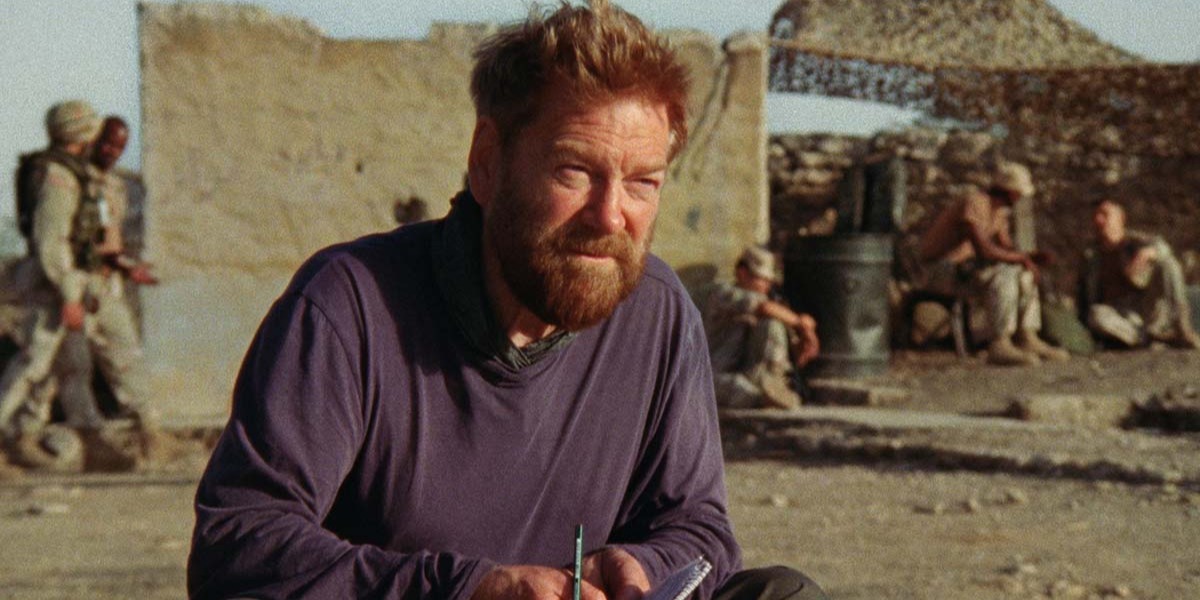
Which brings me to Michael. While I'm always game for Branagh to grace the screen, he does a fine job here in a role that feels way too undercooked for him to really stand out, the inclusion let alone strong focus on Michael is nothing but a contrived mess. After D'Alessandro's involvement in the fatal shootout that devastates the Khachaturian family, Michael arrives to interview various members including D'Alessandro for a New York Times article. His vignette takes place some years after and merely follows him through everyday life, casually brushes past his dissolved marriage, and introduces a letter/video from D'Alessandro asking to be put in contact with the Khachaturians, setting in motion the oddity of Branagh's central placement. How is it that Branagh's journalist is reduced to nothing but a liaison between parties? The will-he-won't-he back-and-forth of if he'll write an article about this meeting could've been more impactful if Michael's story itself had been meatier (how exactly is he impacted by the events in Iraq?) but he's otherwise another odd layer in a strangely misguided film.
Atonement is still entertaining enough, and compelling enough through its bits and pieces to be a worthwhile endeavor. Van Dyk clearly has some strong filmmaking ability and creative ideas, as if that weren't evident with his Academy Award nomination for Best Live Action Short in 2018, and his command of the scene and exploration of characters is still intriguing. However, the lack of screen-time for Mariam, along with a deeper exploration of the Khachaturian family trauma feels like a serious letdown. It leads to imbalanced emotions and underexplored trauma across all parties.
Froth
Atonement wasn't as gnarly to watch as Mr. Nelson, Did You Kill People? but it still possesses the same heavy material that drove me away from heavier beers. So I found myself back with Mill St. Brewery for their Organic Lager. Smooth, crisp, and incomparably light, this lager is an absolute banger of a easy drinker. It doesn't taste or feel like a light lager, instead having a really nice amount of malty flavor and a delightfully floral aroma that makes for a much more fun drink.


![Babies - TIFF [2026]](https://images.ctfassets.net/f4exvld7r7c2/2VL0HdPKGmchDzipaCJuzf/d00b37959b914d4f3331539fdea24197/babies1.jpg?w=600&h=300&fl=progressive&q=50&fm=jpg)


![Mr. Nelson, Did You Kill People - TIFF [2026]](https://images.ctfassets.net/f4exvld7r7c2/24X5bSStiWUL87vVx0xaxH/0944a6ad7c387bb5f9cc5385fe11c0be/mrnelson.jpeg?w=400&h=200&fl=progressive&q=50&fm=jpg)


![Mr. Nelson, Did You Kill People - TIFF [2026]](https://images.ctfassets.net/f4exvld7r7c2/6SFkjQvGuy8nrFF6pJMeIZ/388656b50e4c0de51422eb8cb4dc12eb/buddy.jpeg?w=400&h=185&fl=progressive&q=50&fm=jpg)