


The Testament of Ann Lee

Film
(This review was filed after the 62nd Chicago International Film Festival.)
An epic fable about religious leader Ann Lee, the founding leader of the Shaker Movement, who was proclaimed by her followers as the female Christ and went on to build one of the largest utopian societies in American history. Lee – one of the rare female religious leaders at the time – and her followers worshipped through exuberant song and dance.
Remember The Brutalist, a short, little independently-financed movie from last year that was distributed by A24 and earned ten Academy Award nominations? Directed by Brady Corbet from a screenplay he co-wrote with his longtime creative and romantic partner, Mona Fastvold, The Brutalist was a sprawling story in both size and scope about an immigrant architect in post-war America. It scrutinized big ideas and heady themes, like the cost of creation, the price of ambition, and the burden of belonging. Fastvold's new film, The Testament of Ann Lee, isn't really a sequel, but rather a spiritual counterpart, examining the making of America through another lens: the power, promise, and perils of faith.
Spoilers aplenty
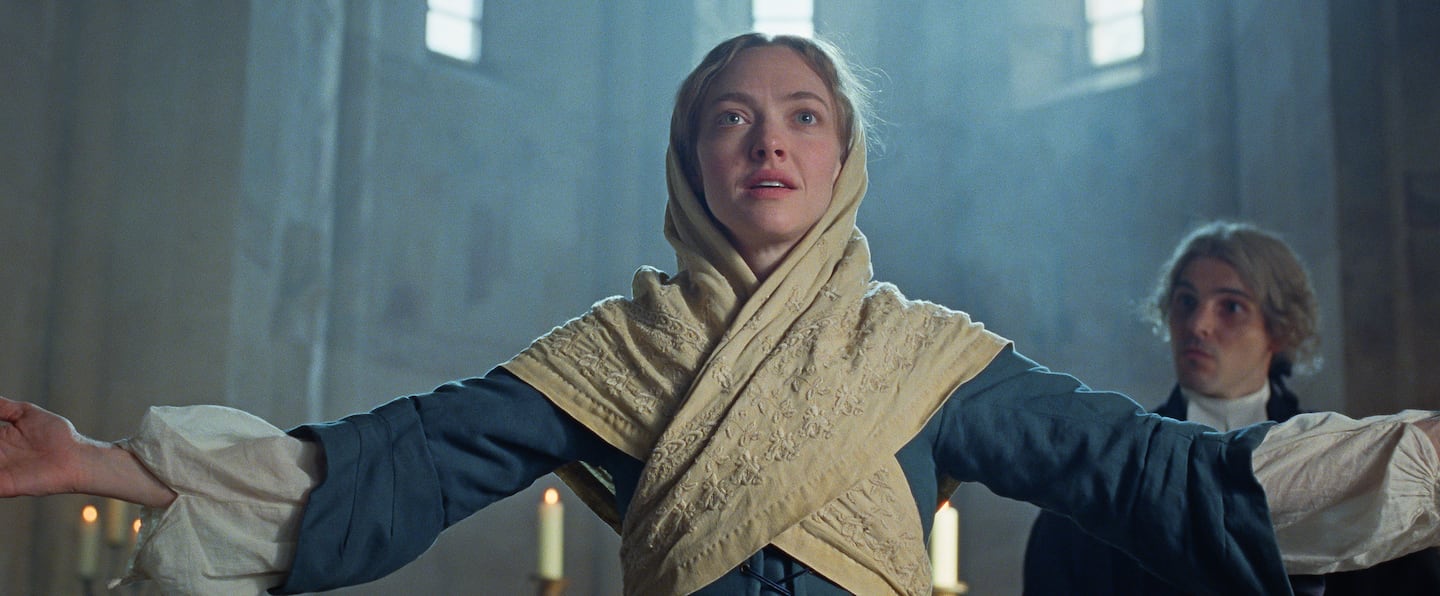
In 18th-century England, Ann Lee (Amanda Seyfried) is a woman struggling against a world that seems determined to limit her, both as a woman and as someone searching for a deeper sense of purpose. She came of age in deeply a patriarchal and misogynistic society where she faced constant hardship, ruthless religious persecution, and the pain of immense personal loss. As her faith and piousness deepened, Ann discovers a path toward peace and a deeper spiritual purpose through the Shaker movement, a grassroots religious group that challenged the conventions of its time with a vision for equality, devotion, and the belief that society can be remade. The Shakers practiced worship through physical expression, attempting to derive sanctity through song, dance, shaking, and ecstatic movement. As Ann became more and more devout and involved with the Shakers, she begins experiencing visions that framed her own journey as a kind of divine transformation, which was consistent with the community's belief that Jesus' Second Coming would be revealed through a woman. Her complete spiritual awakening becomes shaped by her interpretation of Adam and Eve's temptation in the Garden of Eden, which leads to her rejection of earthly desire and embrace the discline of abstinence.
Music serves as the film's most powerful storytelling device, guiding the audience through Ann's revelations and the deepending of her convictions. You wouldn't call this a musical per say, but you also wouldn't be mistaken to think of it as a musical of sorts. Maybe the most pivotal moment is conveyed through Lee's singing of "Hunger and Thirst" – sung alone while she's imprisoned for her ecstatic worship styles and 'threat' to public order, the song encapsulates Ann's soul searching for spiritual fulfillment beyond the body and a yearning for divine connection. Fastvold embraces a level of ambiguity in the way this is conveyed, never revealing whether Ann's visions are genuine acts of true revelation or instead a deeply-held personal belief she creates to find meaning and purpose in her suffering. While this might not be how everyone engages with the movie, it makes this creative decision all the more interesting to consider as the film goes along, especially when analyzing every choice and nuance in Seyfried's performance (which is delicately observed and undeniably outstanding).
Once the Shakers' determine she must be the female Messiah they've been waiting for, the community renames her "Mother Ann," and she becomes their founding leader. In the face of hostility and persecution, Ann, alongside her brother William (Lewis Pullman), devoted follower Mary Partington (Thomasin McKenzie), and the other members of her growing movement, decides to leave Britian, cross the Alantic, and settle in New England in search of a place where their ideals can flourish. Arriving in America offers the prospects for growth and opportunity, but the realities of hard living chip away at Mother Ann's utopian vision. As her stature grows and the Shaker movement evolves into something much larger than a small but dedicated group of believers, so too does her refusal to compromise her beliefs and her demands for sacrifice. The film tracks the rest of Ann's life through her death, capturing the struggle-filled yet steady rise to transform Ann's vision into a thriving, living and breathing community – as well as the gradual decline of the Shaker movement and the slow disappearance of this brand of ideology and devotion.
While comparing this film to The Brutalist is understandable and pretty inevitable, Fastvold's film is distinct in tone and intent. Like its spiritual counterpart, The Testament of Anne Lee is a character study at its core, a film that is primarily interested in unpacking the ambition and legacy of an individual and the intrinsic and extrinsic cost of building something that outlasts oneself. But what sets Fastvold's film apart is its approach in exploring the ambiguities and contradictions that go hand-in-hand with having faith, portraying such belief not as something simple or absolute, but as something that is inherently human and rooted in the search for a higher calling or more substantive meaning. In that sense, The Testament of Ann Lee is intentionally more elusive and harder to get your arms around – the film leaves you unsure how to exactly feel, in a space of uncertainty that leaves less of an immediate impact. Maybe that's not even a point of criticism but just a by-product of keeping things more open-to-interpretation.
I'd be surprised if The Testament of Ann Lee catches fire through word-of-mouth and experiences the same kind of groundswell as The Brutalist did not that long ago. Maybe that is for the best in some ways. This film is certainly not standard a crowd-pleaser or intended to speak to everyone. But like all great art, it has bold aspirations and a singular point of view – for those who connect with it, I imagine its impact will linger profoundly. "When all is said and done | You'll believe God is a woman"


