


Blue Moon is Ethan Hawke at His Best

Film
Back with his once frequent collaborator from the Before trilogy, Richard Linklater brings in Ethan Hawke for Blue Moon. It's a cozy, jazzy chamber-piece that serves much more as a platform for the criminally under-appreciated Hawke than it does the entertaining hang-out films of Linklater past. As the late great lyricist Lorenz Hart, Hawke not only dives into the role, but lands a perfect ten, displaying an extreme variety of emotional chaos with nothing but ease. But that doesn't make Blue Moon as sensational as it should be as Robert Kaplow's dense, lyrically verbose script may be difficult to follow at times, the first act is an arduous journey to climb through. A litany of musical theater references and a smattering of divergences from Hawke's jittery, depressed Hart trying to keep a cheery demeanor delivering a fair amount of whiplash. But anyone in his shoes would be so emotionally unstable, his longtime partner Richard Rodgers (Andrew Scott) just celebrated the opening night of his musical written with Oscar Hammerstein II (Simon Delaney), "Oklahoma!" Although the drama, at times feeling like something from a Bravo reality TV show, is delectable, driven by Hawke's feverish performance, Blue Moon ultimately flounders in matching its lead performance's intrigue.
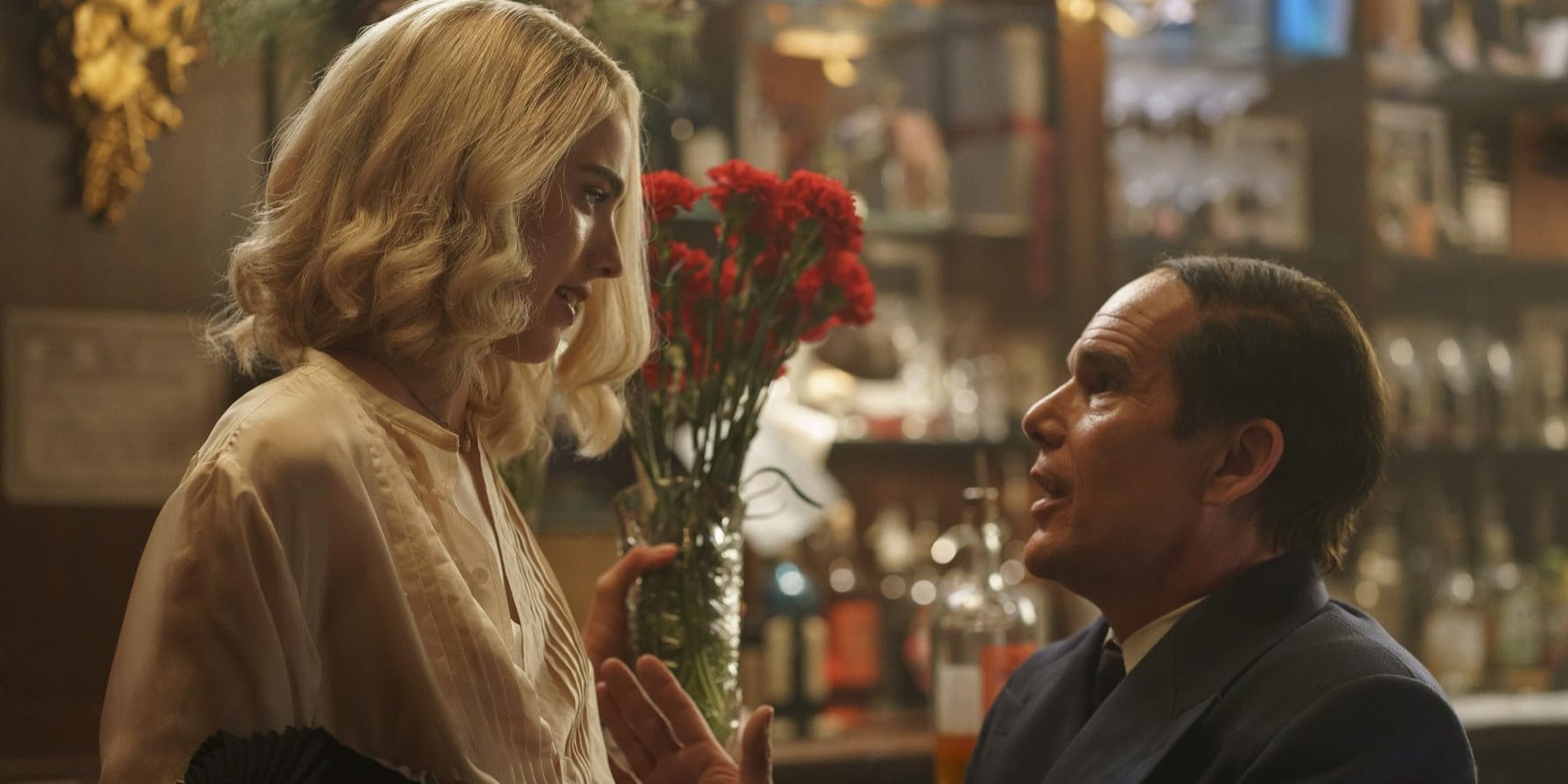
The primary problem with Linklater's latest-well, one of two latest as he's also putting out Nouvelle Vague this year-is a treacherous first act. Hart's unraveling maintains a snail's pace, while the quick-as-a-whip delivery from Hawke jam-packs two hours worth of dialogue into a package ten sizes too small. The walls are bursting at the seams, and it would feel as though your brain is about to burst handling another monologue from Hawke. Especially about how he's in love with a 20 year old girl, Elizabeth who's played by a sorely out of place Margaret Qualley. The film's locale serves as double edged sword with interestingly reserved direction from Linklater in a single location yet embodies the feelings of being trapped with a spiraling man rambling about musical theater, fighting his demons, and yes, once again talking about a girl he met. If you're well-versed in musical theater, the comments from Hart might be exciting easter eggs, many of them went over my head, but no matter what you're interested in you can only handle so much talk from someone about a person they've met and are in love with before you start to resent them both. Harsh? Possibly. But Kaplow's script fails to push through the very evident addictive personality of Hart to get to the more interesting pieces of his psyche, instead relying on this trope of "guy talks to bartender about his love life" ad nauseam.
Luckily, a breath of fresh air enters the room when Andrew Scott's Richard Rodgers appears, delivering an equally stunning performance as a partner that's loyal and loving but absolutely fed up with Hart's destructive behaviors. Where Bobby Cannavale's bartender is ready to serve up another drink at the behest of a longtime patron, Rodgers recoils at the sight of Hart holding a glass of champagne to toast to the success of Oklahoma. The chemistry between Hawke and Scott is tremendous, and the tension is palpable. Their shared desire to work together again takes different forms amongst the men as Hart undergoes a manic frenzy spitting with envy and sadness whereas Rodgers is filled with aching sadness and restrained anger towards his old friend. Scott's portrayal of Rodgers oscillates between fright, concern and dismay all in one sweeping motion while patrons come to celebrate his accomplishments, his success feeling like an echo in the back of his mind while his dear friend screams for more of him. The push and pull these characters have elevate Kaplow's otherwise scatterbrained script and the performers putting on the show are quite frankly, stellar.
Unfortunately, the issues that plagued the first act reemerge once Scott is back off-screen, coincidence? I think not. Hawke, no matter how phenomenal his performance, simply isn't getting the same energy from the rest of the cast. It's especially tragic that Qualley's performance, and character as a whole, feels so out of place. She's almost anachronistic in her portrayal and that's not to diminish Qualley as an actress, but Kaplow's writing gives her nothing to work with and nothing for Hawke to go off of.
Nevertheless, I couldn't help but enjoy Blue Moon for the sheer presence of Hawke and Scott. The magnitude of their performances is just too large to ignore and too good to truly dislike the final product. Linklater also impresses me time and time again with his choices in this recent epoch of his career. He's experimenting without being avant garde and still pulling some terrific performances from his cast. While Blue Moon may be my least favorite of his recent works, as of writing this I have yet to see Nouvelle Vague, I still respect his continued boundary pushing, no matter how minute it may be.
Froth
I'll keep this one quick and easy, after I just lamented about the density of Blue Moon, and mention that I enjoyed a lovely IPA from Fast Fashion Brewing called Control Artist. Naming subtleties aside, the Control Artist was a solid beer and hit all the pleasure points I was looking for. It was crisp, hoppy, refreshing, and with minimal bitterness that allowed the citrus overtones to really come out to play. It's considered a West Coast IPA so it definitely had a more dank, hoppiness to it than anything else but that's definitely something I enjoy so I wasn't overwhelmed by any means. In fact, it was the perfect sipping partner that was easy to drink and immensely enjoyable, making it a little easier to get through the jungle of musical theater references and talky dialogue of Blue Moon.


