


The Odyssey


Film
The Odyssey is a mythic action epic that adapts Homer's foundational saga.
Scholars and historians have been on this for some 3,000-odd years, but let me be the next to say: Homer's Odyssey, one of the oldest surviving epic poems of ancient Greek mythology and a cornerstone of Western literature, is in fact one of, if not the most influential story in the history of... well, stories. Its cultural impact and persistence is predicated on it having popularized and perfected many of the same evergreen literary concepts and narrative tropes writers and readers still recognize and rely on to this day (this may very well be the "big bang" of the "Hero's Journey"). So, I'd be out over my skis if I rambled on about why this age-old masterwork is... you know, uhh, masterful. In the great tradition of adaptation, the Odyssey is in a constant cycle of being retold, rehashed, and reinterpreted – thanks to its sturdy structural composition and the depth of its philosophical themes, it endures like no other.
Which brings us to The Odyssey, the latest rendition of Homer's classic – here's one of the greatest stories ever told brought to you by the most powerful and prominent filmmaker working today at the absolute peak of his proverbial powers. Two years removed from his coronation as a bona fide master of the cinematic form, the inimitable Christopher Nolan returns this summer with The Odyssey, the kind of bold and almost reckless creative undertaking you get the opportunity to pursue only when you have more clout and as much pedigree as any of your contemporaries. Over the course of the last quarter-century, Nolan has metamorphosed from a shoestring-budget, independent filmmaker who made a name for himself at Sundance into one of our most successful auteurs and cinema's most reliable and trusted box office brand. Alongside his wife and producing partner, Emma Thomas, Nolan and his films have become the gold standard in Hollywood – his projects are prestigious but still consistently and hugely profitable; he surrounds himself with some of the best above- and below-the-line talent the industry has to offer; and, he has a first-class reputation as a consumate professional, a receptive collaborator, and a stalwart advocate for movies and the advancement and preservation of the film-going theatrical experience.
But as they say, heavy is the head that wears the crown – when you're at the tippy top of the mountain, there's significant pressure not only to satisfy the sky-high expectations that come with every next step, but to exceed what you've already accomplished. Your supporters crave more, your colleagues want a piece of the pie, and your critics exploit any and every opportunity to knock you down a notch. You'd think at this point, Nolan has nothing to left to prove to anyone, which makes his decision to quadruple-the-fuck-down and adapt mfkn Homer at this pinnacle moment of his career seem all the more audacious. Loose and messy, but dazzling and awe-inspiring, The Odyssey is a maximalist, almost ostentatious showcase of Nolan's ambition and skills as a filmmaker. Burdened by the nearly unbearable weight of massive talent but still firmly supported by its staggering technical majesty, it's decorated to the nines with all the bells and whistles that a blank-check budget from Universal can afford. It's the kind of movie that insists upon itself but still manages to up the ante in nearly every way possible for an already-prolific filmmaker who is angling to permanently cement his legacy – not only as the greatest director of his generation, but of all time. Does it get any more grandiose than this?
Background aplenty
Breaking this beast of a nearly three-hour, sword-and-sandal movie down scene-by-scene would be foolhardy and frankly a waste of both your time and mine (trust me, you don't want me getting too into the weeds with this one – you'll quickly realize how full of shit I really am). Being familiar with Homer's work is by no means a prerequisite for seeing this film, but it certainly wouldn't hurt (my guess is you'll probably have a sense of the story beats if only by way of cultural osmosis). Now is probably the time to mention that this isn't your grandparents' – or even your parents' – take on this story. Nolan's adaptation is heavily inspired by classicist author and translator, Emily Wilson (her 2017 translation of the Odyssey became the first ever by a woman into English verse, and she later released a translation of the Iliad in 2023). From what I understand, her work is considered to be pretty progressive, if not a bit reformist, intentionally challenging much of the archaic prose and many of the masculinist tropes found in older translations. Some scholars have accused Wilson of having too much of a slant and an alterior agenda in her work (like reducing important details down too far and cherry-picking the way certain things are worded), which completely recontextualizes certain aspects of the story and may even misrepresent a more true-to-the-source reading of the text. Having not read her translation, I assume this kind of reimagining of an ancient text makes it a bit more accessible and palatable. Safe to assume that this kind of radical revision might be good for those of us laypeople, but bad for the hardcore historians out there.
Like Wilson, Nolan views this material through a similar lens and he approaches it with a similar(ish) goal – he utilizes colloquial language, deconstructs the mythology, and shamelessly relies on his own modern sensibilities to draw in more of the general public (rather than catering strictly to the academics). Makes sense when you need to deliver a surefire commercial hit and earn upwards of $750 million just to break even, right? To take it a step further, Nolan makes several colorblind and trans/gender-fluid casting decisions that attempts to push the of anti-traditional sentiment to the very front and center of the frame. This, of course, prompted the sort of toxic public discourse and ineffectual culture war over DEI that you might expect these days, where "preserving historical accuracy" is weaponized and used to deprecate modern inclusivity and representation on screen. Talk about an agenda, eh? Many of these creative choices mustn't be taken lightly, as they do affect the way in which audiences will receive the film – that said, I found the "backlash" around how "provocative" these so-called "controversial" casting decisions to be at best, downright stupid, and at worst, blatantly racist, outright transphobic, and undeniably prejudiced. This kind of anti-woke outrage is completely dissimilar from and far more problematic than taking any issue with the nature and spirit of the translation – bemoaning "historical accuracy" in service of bigotry for a story that includes magical creatures, enchanted locales, and divine intervention is fucking disturbing and delusional, and not worth acknowledging any further.
Spoilers aplenty
Like most of Nolan's films, The Odyssey is made to be pretty approachable from a mass entertainment perspective for the Average Joe or Josephine Six-Pack to enjoy. Still, all his films, including this one, are, by design, tightly constructed, a little emotionally distant, and oftentimes difficult to get your arms around – he's always been allergic to hand-holding and spoon-feeding his audience needlessly, and instead, fully trusts them to fully trust his choices as a storyteller. Rather than being well-versed with Homer, it's probably more helpful to be familiar with Nolan's past filmography. Similar to the source material it's adapting, this rendition of the Odyssey is told in a non-linear narrative fashion – which is definitely not something that Nolan has ever been known to do in one of his movies! Quite the contrary of course – this 'a' or maybe even 'the' defining feature of his cinematic style, making this a kind of 'match made in heaven' between the art and its adapter. All great filmmakers borrow and steal bits and pieces from other great filmmakers, but Nolan has now entered the zone where he's borrowing and stealing from himself. His films echo and are in constant conversation with one other, and he keeps finding new ways to iterate on his own technique and push himself further.
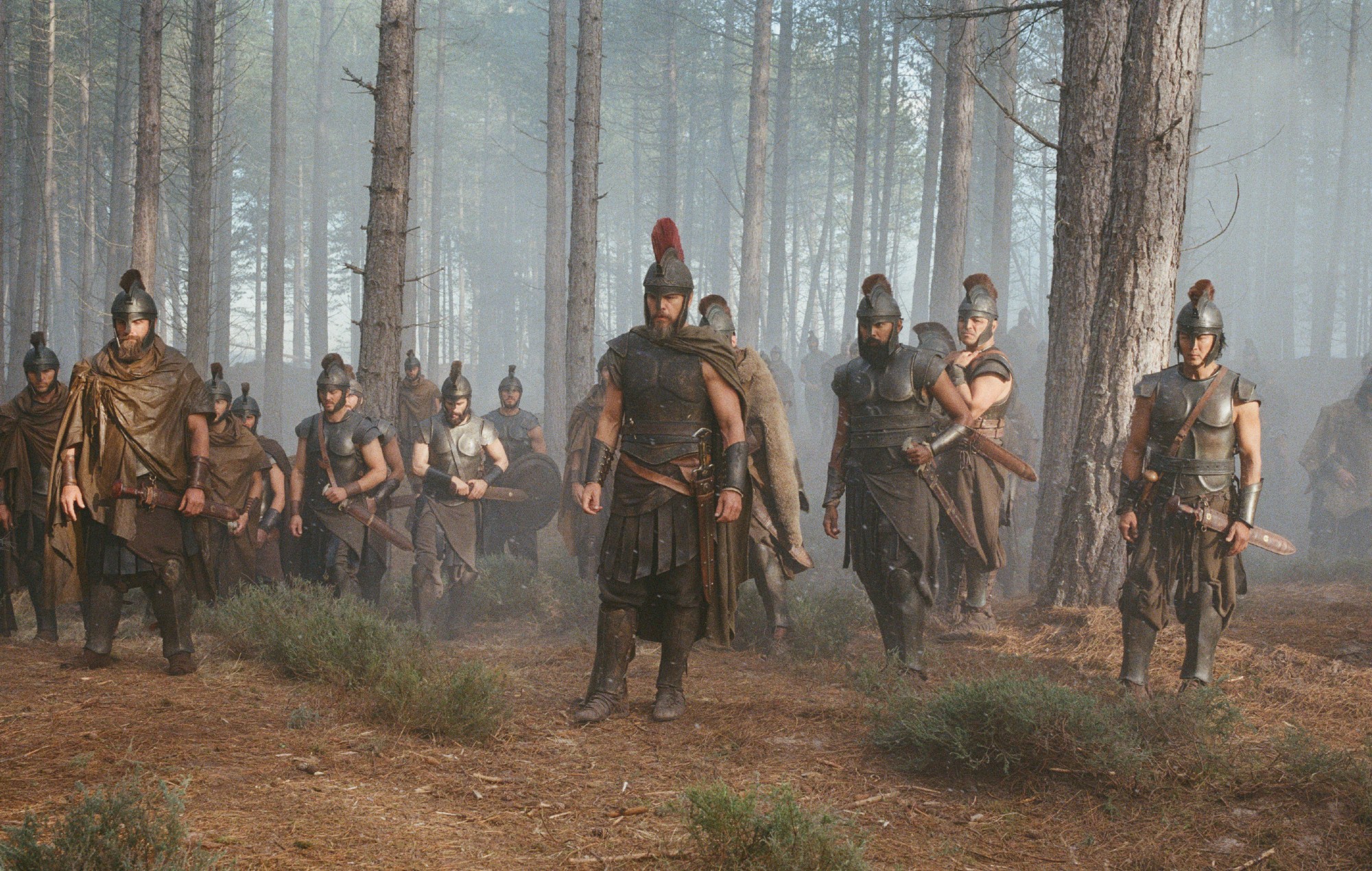
Nolan's screenplay for The Odyssey is not nearly as disorienting as Memento or Tenet, is far less deceptive than The Prestige or Inception, and isn't as carefully synchronized as Dunkirk or Oppenheimer. The film's narrative structure is best understood as the convergence of five gently interwoven timelines that gradually converge by the film's third act: the Trojan War (the past), the Wanderings (Odysseus' journey), Ithaca (Penelope & Telemachus), Calypso (psychological turn), and the Return (where all the timelines neatly converge). As is the Nolan special, this cross-cutting isn't meant to be a puzzle for its own sake (except for in Tenet), but meant to lead to revelations that arrive in the story at a precise moment to deliver the greatest emotional impact. Working again for the third time with esteemed editor Jennifer Lame, who won an Oscar for her work on Oppenheimer, Nolan once again relies on her ability to aptly move with ease from one character, place, and story idea to the next without losing any kinetic momentum. While Nolan's screenplay falls short for me here compared to his career-best work on Oppenheimer – I found this script to be a bit too exposition-heavy and at times lacking in emotional connection between its characters – Lame's knack for rhythmic pacing and her savviness in balancing spectacle with quieter, more intimate moments confirms she is not only one of the best in the business, but that she has helped unlock a new gear for Nolan ands is tailor-made for his preferred mode of meticulous filmmaking.
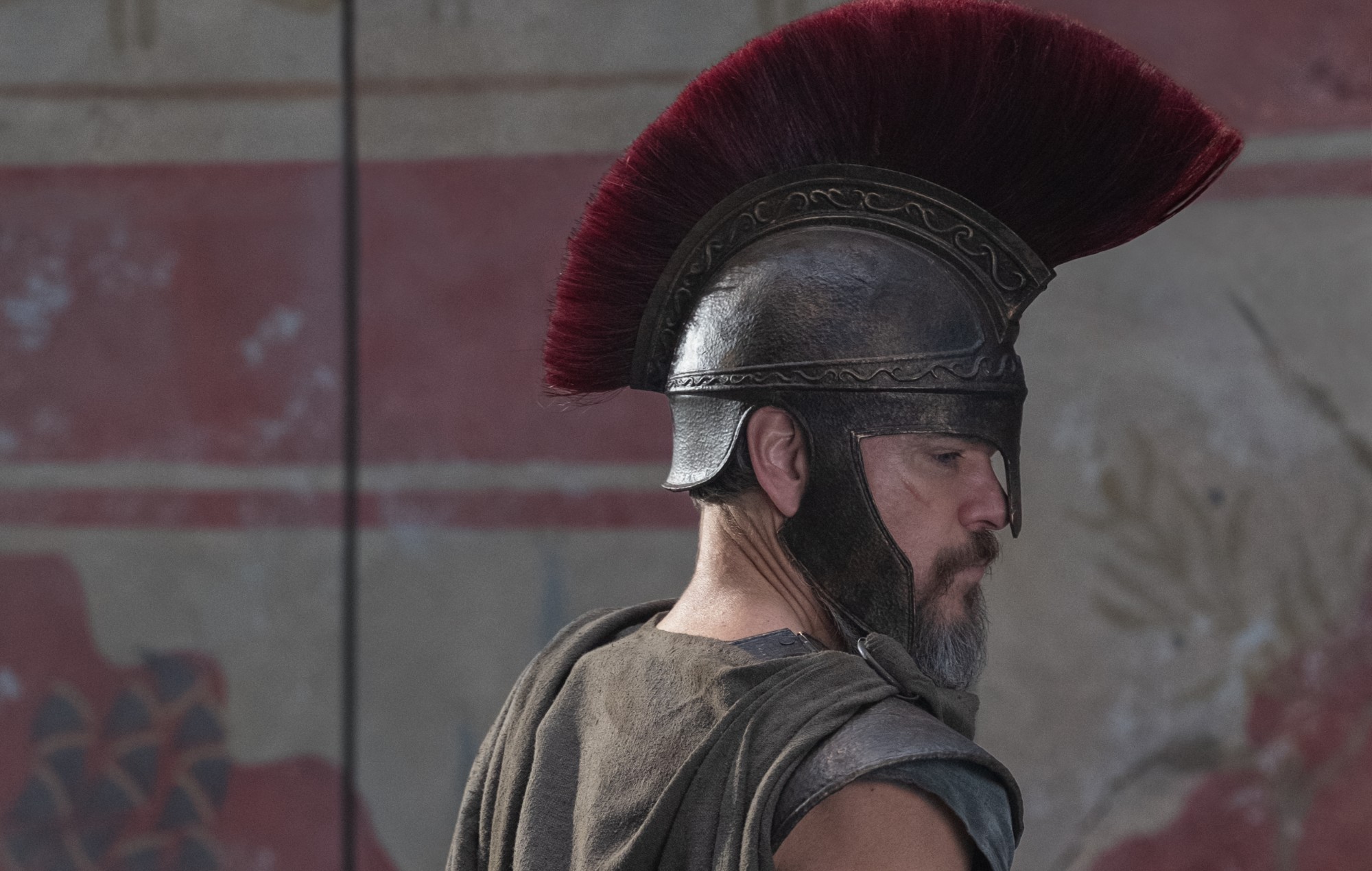
From an audiovisual perspective, The Odyssey receives top marks across the board. I've already mentioned Lame's editing, but there's a whole slew of craftspeople that need mentioning. There's the ambient score from Ludwig Göransson (also his third collaboration with Nolan), which is void of an orchestra but all the more haunting and atmospheric because of it. It's a prime example of a score that has less replay value on its own and outside of the context of the film, but works extremely well inside of the story. Like Hans Zimmer before him, Göransson is clearly now the go-to composer of his time, and I'm confident he'll continue getting his pick of the litter when it comes to working with the best directors on the most interesting projects available to him. The production design from Ruth de Jong is tactile and immersive; the costume design from Ellen Mirojnick may have ruffled some feathers for its inaccuracies or plainness but I found to be grounded and timeless (and badass in the case of Agamemnon's armor and helmet); and the sound design and mixing from long-time collaborator Richard King (his ninth collaboration with Nolan) is extremely impressive considering the challenges presented with the natural conditions on the set. And then there's the immortal and prodigal cinematographer-extraordinaire, Hoyte van Hoytema, who is also hands down the absolute best at what he does in Hollywood. This is his fifth collaboration with Nolan (are you seeing a trend here?), having also just won an Oscar for his work on Oppenheimer. His work on The Odyssey is arguably his most difficult undertaking and greatest output to date, making it one of the most impressive visual achievements in cinema this side of, idk... Lawrence of Arabia or Mad Max: Fury Road, or something at that level. Think about it a second – the full-frame IMAX photography for the entire shoot, the natural light shot on location, the practical visual effects and stunt work over the use of CGI however and whenever possible – the list goes on, but the point here is short and sweet: this is an absolutely majestic and mesmerizing film to look at.
Which brings us to the almost distractingly jam-packed cast of stars and familiar faces ever stuffed into this big of a blockbuster. There's a quintet of powerful female performers – Anne Hathaway, Lupita Nyong'o, Samantha Morton, Charlize Theron, and Zendaya – all of whom are either in the film for less time than one might imagine or have less to do than one might expect. Despite his proficiency, Nolan has always struggled with his ability to portray women on-screen in meaningful and nuanced ways. Might I remind you of his "dead wife/girlfriend problem" (like in Memento, The Prestige, The Dark Knight, Inception, Interstellar, and Oppenheimer) – his films follow a similar recipe, and The Odyssey once again is a story that positions women as side characters, romantic interests, or tragic figures used to further the central male protagonist's arc. This isn't so much a critique as it is an observation – I'm not suggesting Nolan should've completely revamped his adaptation to be more feminist than the Wilson translation he is pulling from, but it's worth pointing out that he can't stop making the same movie. All the aforementioned women are good-to-great, particularly Morton, who makes the most of her moment and devours every second of screen time she gets. Zendaya, Lupita, and Charlize are completely underused and underserved here, which is disappointing considering the power of their personas and the prowess of their talents. Hathaway feels right at home in a Nolan movie, and she knows just how to modulate her performance based on what each scene requires.
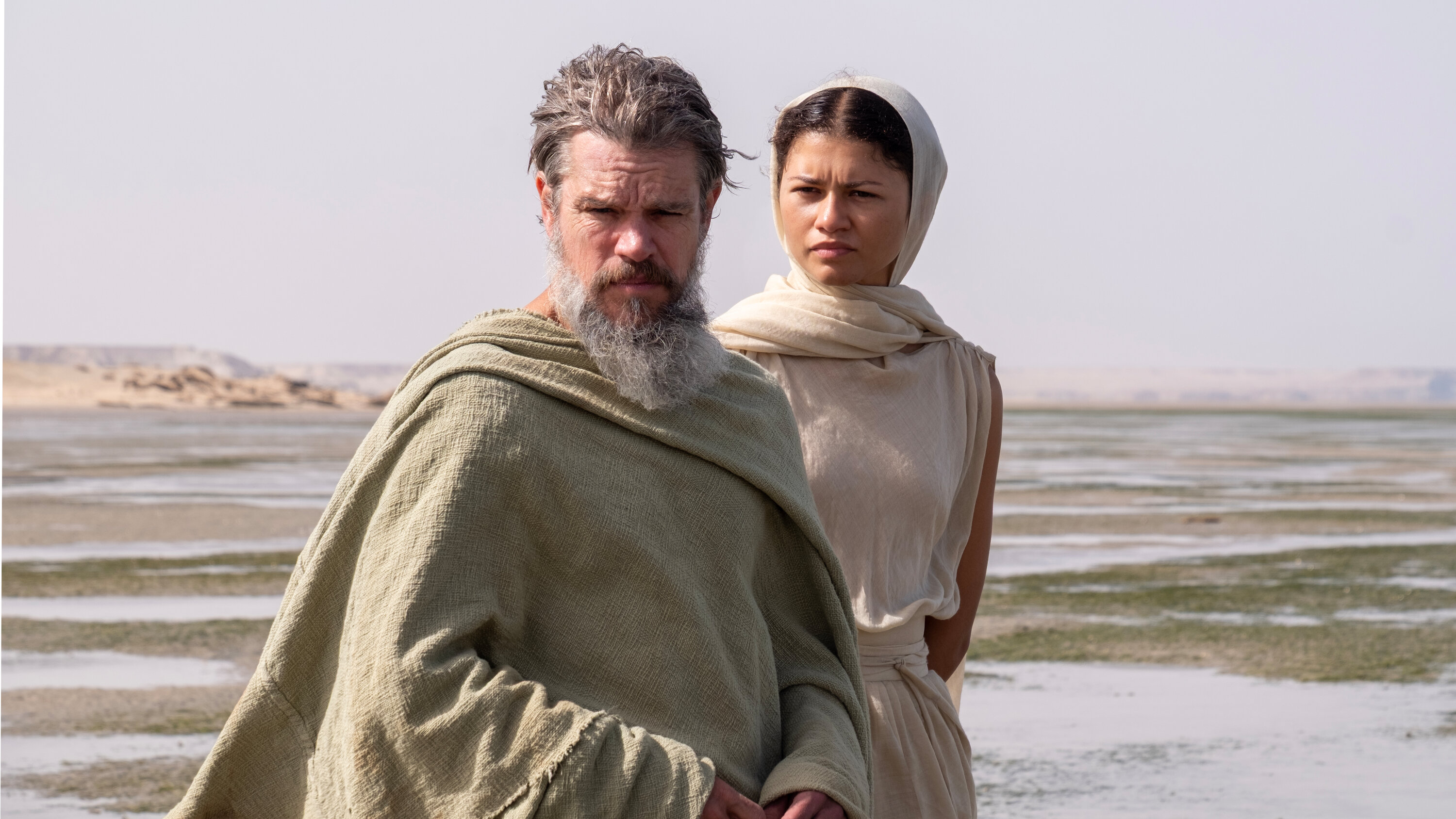
As for the rest of the cast, Jon Bernthal and Himesh Patel are good; John Leguizamo is very good, one of the highlights; and Robert Pattinson does his best to steal the movie, which is something he does regularly these days – in a cast this star-studded and talented, he manages to dominate the screen every chance he gets. Then there's Elliot Page and Benny Safdie, both of whom are not in it all much but are memorable and embody some of Nolan's most interesting directorial choices. And then there's Tom Holland, who holds his own despite having maybe the most thankless part of the bunch. It may simply be that he's miscast, but I'm going to choose to believe that this is a better movie because he's in it, if only because he embodies a certain goodness that is required for his character. Which brings us to Matt Damon and his homegrown beard, who puts his entire weight and legacy as an actor, as a movie star, and frankly, as a human being into this part. Like our beloved Cillian Murphy similarly did in Oppenheimer, Damon puts the full weight of the movie on his shoulders but is wholly empowered by the immensity of the opportunity. He nails every mark without a false note.
We've talked about the spirit of the adaptation and the structure of the screenplay, most of which works and some of which does not. We've talked about the masterful craft and the highs and lows of the acting performances. And while we've talked about Nolan's greatness and how The Odyssey is an illustrious example of his capabilities and virtuosity, it also encapsulates and highlights some of his shortcomings as a filmmaker. Nolan has shown time and time again that he has a screenwriting or project-conceiving problem – he is somewhat thematically repetitive, rather politically ambiguous, and perhaps not as progressive or transgressive as an artist as he believes himself to be. Thematically repetitive in that he consistently returns to the archetype of a historically significant "great man," like Oppenheimer, or Bruce Wayne, or Cobb from Inception, or Cooper from Interstellar, or Odysseus, all of whom are guilt-ridden and memory-obsessed, tortured geniuses. Politically ambiguous in that he intends to criticize or critique these brilliant, powerful men who typically achieve extraordinary things while causing significant harm to others – but he ends up portraying their personal guilt and psychological suffering as the primary conflict of the story while failing to fully interrogate the broader consequences of their actions and choices. And not be as progressive or transgressive as he believes himself to be mainly because he celebrates power and authority just as much as he critiques it and not in a boundary-pushing, 'poke-you-in-the-eye' as a provocateur type of way – more like a safe and steady, almost tone-deaf "have your cake and eat it too" type of way. I'm not trying to land a fly in the ointment here, but these are valid recurring concerns for a filmmaker who will be able to do whatever he wants, whenever he wants, however he wants to creatively-speaking for as long as he wants.
Regardless, the hype is still very real and The Odyssey is still quite excellent, a triumph in more ways than not. Nolan uses all the tools in his repertoire to deliver another story about choices, the consequences of those choices, and the road to redemption. Through Odysseus, he asks questions about what it means to break the sacred bonds between people and to betray the will of the gods. If you thrum your bow before a hunt, is your morality preserved? Did the men who sacked Troy breach Zeus' Law by way of the Trojan Horse metaphorically or did they quite literally unravel civilization and destroy the terms of our hallowed social contracts? What does it mean for someone to be responsible for this, and how do you return home and not only be accountable for your actions, but can you atone? It's hard to fully process what exactly Nolan and his team pulled off here – much less attempted in the first place!! In a time when automation and artificiality runs rampant and plunges deeper into every nook and cranny of our society, turns our every day lives inside out, and yes, corrupts the sanctity of our art, it is hard to articulate just how much a film like this really means. What The Odyssey is trying to say might be a little convoluted, but what it attempts to pull off is entirely admirable. How it looks and feels to experience is utterly unforgettable, and what it means, as an artistic endeavor, is nearly immeasurable. "In a time of apparent magic..." is the intertitle at the beginning of the film, which may or may not allude to the presence of the gods and their divine intervention. It's possible that the apparent magic being referenced has more to do with the mere existence of this film and the experience of seeing it in all its splendor.
Froth
I must not tell lies, and the honest to Zeus truth is that I had a Michelob Ultra during dinner before I went to this screening. Yes, you read that right. And no, I'm not going to explain myself or elaborate any further. It did the job, okay? Not every beer needs to change your life.


