


The Invite

Film
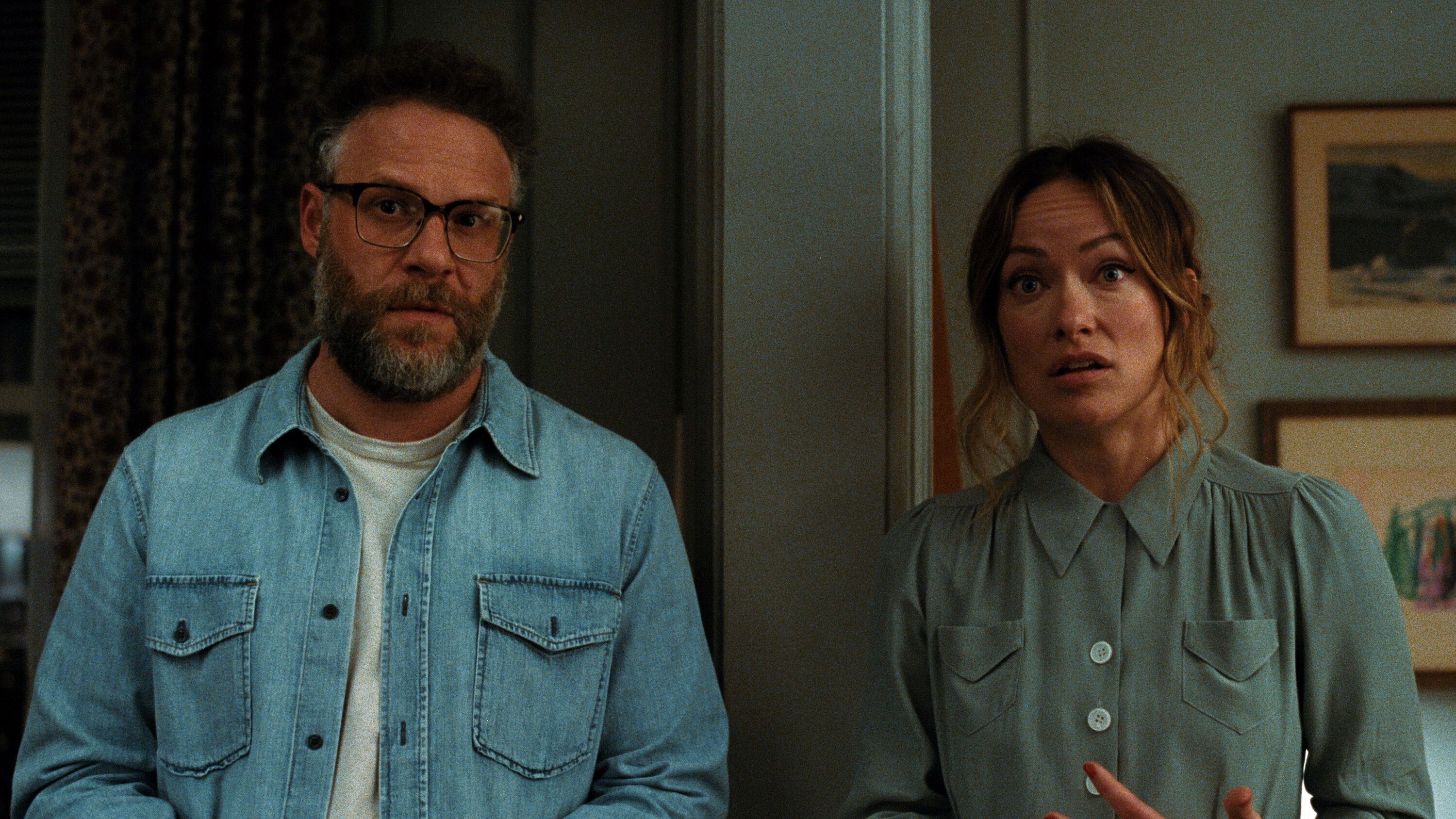
Joe and Angela’s marriage is on thin ice. When they invite their enigmatic upstairs neighbors for a dinner party, the night spirals into unexpected places.
Could one couple’s cringe be another couple’s kink? Or is one couple’s emotional prison another couple’s sexual liberation? What has been fairly labeled a “return to form” of sorts for director Olivia Wilde comes her latest feature film, The Invite, an adult, single-location, four-hander chamber comedy centered around a pair of couples and a friction-filled dinner party that feels like it is happening inside of an Instant Pot. Booksmart, Wilde's directorial debut, was a coming-of-age comedy that gave her instant credibility as an upstart, "she's the next big thing" indie-darling filmmaker. Don't Worry Darling, her blank-check, high-concept, follow-up feature, was far less successful; it was panned by critics, rejected by audiences, and perhaps plagued by its own on-set dysfunction and behind-the-scenes controversies. But unlike her last film, The Invite is airtight – if not downright suffocating – in both concept and design, from start to finish. It’s a story boiled down and reduced to its most essential essence, leading to a more concentrated and potent statement. More importantly, the film has an authenticity and a distinct point-of-view, and it shows Wilde in touch with and in total control of her artistic voice as both a performer and as a filmmaker.
Spoilers aplenty
Set all in one night, the downstairs couple, Angela and Joe (played by Wilde and Seth Rogen) are hosting the upstairs couple, Pína and Hawk (Penélope Cruz and Edward Norton) for a dinner party (which was either casually impromptu or painstakingly premeditated, depending on who you ask). Angela and Joe seem to be in the doldrums (or a permanent ice age) of their middle-aged lives, far removed from any honeymoon phase. They are in dire need of some couple’s therapy – little do they know, they’re about to stumble into one! Pína and Hawk (who are both enigmatic, alluring, but also maybe full of shit?) show up in the middle of Angela and Joe fighting. They’re bickering about the kinds of all-too-familiar nothings that couples fight about when one of them wants to do one thing and the other wants to do anything but that one thing. The film does a good job of capturing the anxieties of being neighborly (especially when you don’t want to be), the trials of making friends in adulthood (which seems to be extremely difficult if you’re not a parent), and the awkwardness and urban claustrophobia of having shared walls, ceilings, and floors in an apartment building (where you might hear everything – and I mean everything – that is happening in the unit next door, above or below you). After a rough start to the evening, things start to slowly get better before they inevitably get worse; but then, with each new reveal, the night begins to turn into something else entirely – I think you can probably guess without me having to say much more.
To call this film a blunt meditation on marriage, monogamy, and modern romance would be a slight misnomer and a bit of an off-label description – yes, all of those big ideas and thorny themes are swirling around at the center of this story, but the film's cutting comedic sensibility underscores every single twinge with a joke. Adapted from a 2020 Spanish film called The People Upstairs (which was written and directed by Cesc Gray and based on his own play), this English-language remake was co-written for the big screen by both Will McCormack and Rashida Jones. From minute-to-minute, their script is sharp, serrated, and full of lots of pointy observations about polyamory, heteronormativity, and the exploration and deconstruction of how a "traditional" relationships function (and oftentimes fail). What makes Wilde's rendering of this material work is her careful consideration of those nuances in the story, her tonal restraint, and her commitment to the sincerity for how these characters act and comport themselves given the circumstances. Though it is undoubtedly a true-blue comedy and even a bit farcical at times, the characters, their motivations, their unspoken desires, and the consequences of their decisions are always taken with sincerity and conveyed open-mindedly. The film, despite its ability to make you laugh and maybe even feel a smidge uncomfortable, is always seeking a deep inner truth, which might be the biggest compliment you can give any film.
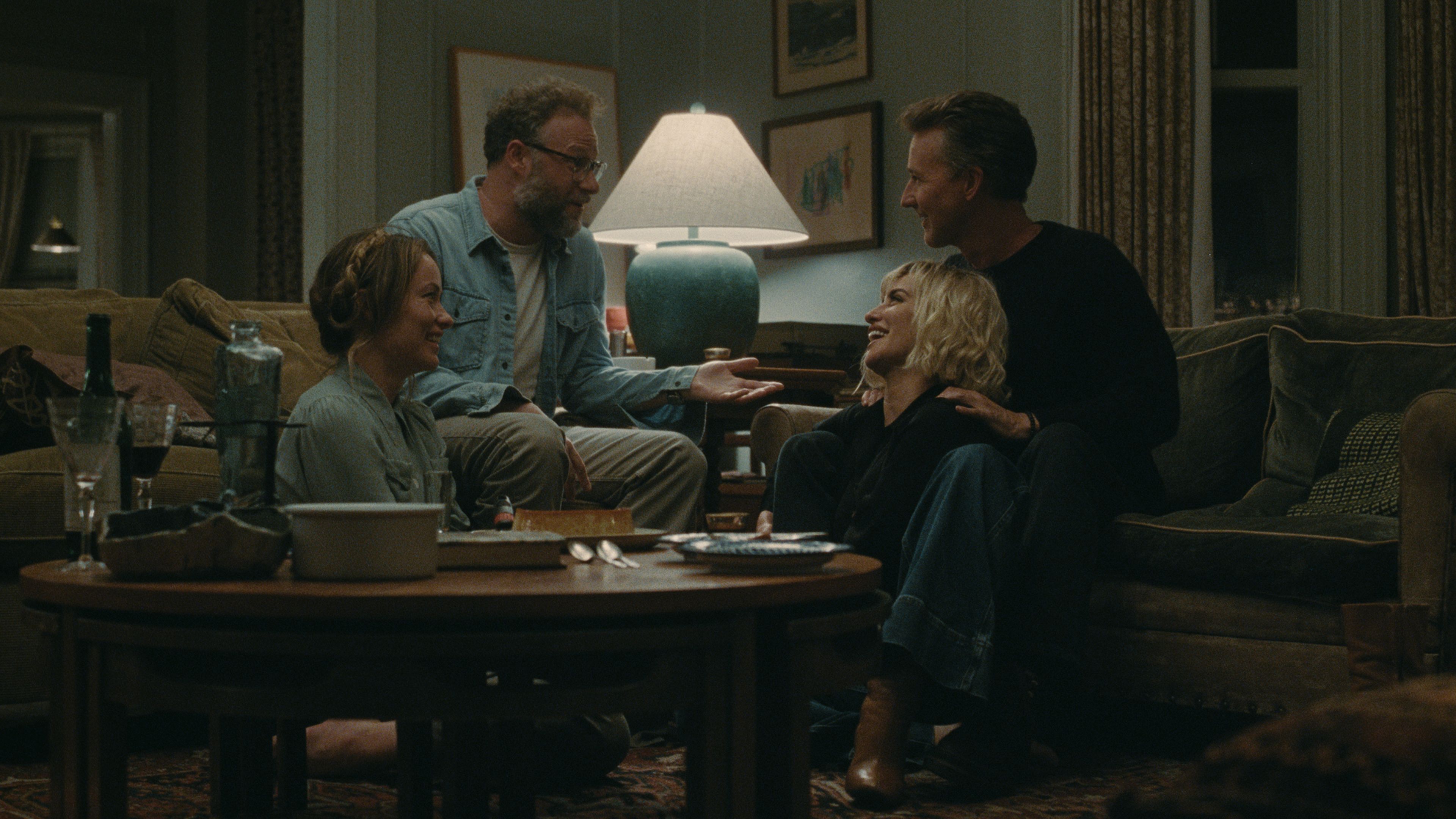
The Invite is brought to life by a quartet of talented performers, including Wilde herself. Shot in just 23 days, the collaborative chemistry between all four actors is incredible, and you can tell that they all did a lot of rehearsing and had the creative freedom to make a lot of bold but brilliant acting choices. While Cruz, Norton, and Wilde are all great (this really untapped some of the energy that Cruz and Norton have and serves as a reminder of their powers), I walked away thinking about Rogen. He is not only one of the most influential comedic forces in movies of the last 25 years, but he has become a damn good actor in his own right. There are very few working actors today who have a better grasp of their own on screen persona, and even fewer who have his kind of comedic instincts. Every line delivery he has is note-perfect, and every choice he makes is interesting. To the film's credit, there is not a weak link between the four of them, and the balance they provide one another is magnetic to watch. Also, there are few things funnier (today or ever) than watching Rogen get all revved up, lose his cool before losing his balance, fall over, and break a glass table. Physical comedy is still alive and well!!
While nothing in The Invite feels underproofed, I did find some of the film's crafting to be somewhat overbaked. Don't get me wrong, I'm normally a huge fan of meticulous framing and a flashy shot list, but I did find some of the film's blocking and shot composition to be a bit distracting. I felt similarly about the editing, musical score, and sound design – there's something ultra-flashy about the technical aspects of the film's first half, which flexed a certain "look what I can do" conceit that sometimes seemed a tad superfluous and over-manufactured. It’s a good reminder that that less can often be more in situations like this; it may not always be the right move to show what you can do formally just for the sake of showing it. Others might quibble with my quibble, retorting that all of those decisions are essential and are in service to each scene. Don’t get me wrong, there is high-caliber craft at every turn in this movie, and Wilde was really in her bag, but some of the stylistic maneuverings undercut and over-occupied some of the space inside the frame and between the line readings.
Nailing an ending is never easy, and I thought The Invite did so beautifully. It is ambiguous, but elegantly so. It’s wide-open to interpretation and bound to speak to people in different ways – what you bring into a movie often determines what you might take from it, no? And the final needle drop that serves as the cherry to the whole sundae is “Our House – Demo,” an acoustic and raw version of a memorable song that captures the love between two people, namely Graham Nash and Joni Mitchell at a specific moment in time right… before it washes away. You can imagine them sitting together at a piano, their voices complimenting one another, living without a care in the world. “Now everything is easy ‘cause of you.” In retrospect, it is almost heartwrenching to listen to, knowing their love is fleeting and something that isn’t meant to last. And in that way, it’s not dissimilar to what The Invite is all about – it’s bitter and sweet, sour but savory. Not all good things are meant to last, and not all endings are bad.
Froth
Few things are better than a late-afternoon stop-off at Off Color right before the holiday weekend. Am I right or am I right? In treating this five o'clocker as a pit stop rather than a long stop (?), I opted for something a little more mellow (keep that ABV down) but still malty and quenching (it's important to maintain drinkability in the dog days of a Chicago summer). Beer For Kicks (which also felt on-brand given the World Cup-ness in the air), was as advertised: a perfect pitch side companion, sessionable yet crushable. It's a nicely balanced beer that did the job and it did it nicely. Definitely had a noticeable sweetness but still a deep flavor. I'm a fan – would recommend – go try it.


