


Primetime


Film
In 2006, To Catch a Predator host Chris Hansen sets out to make television history, turning an undercover investigation into one of the most controversial cultural phenomena of the decade.
He's on something of a generational run, as the kids say. The inimitable Robert Pattinson, who has now been in our lives for twenty odd-years, has fully come into his own as a chameleonic actor crossed with a bona fide movie star – he's the ultra-rare combination of talent + it factor that doesn't come around all that often. But what really sets Pattinson apart from his contemporaries is his boldness and bravery for picking (but also attracting) interesting projects. He's a matinee idol, tall and lanky with striking facial features, a razor-sharp jawline, and those relentlessly yearning eyes. But behind all the Edward Cullen nostalgia and past the wafts of Dior Homme fragrances is a truly instinctual and rhythmic actor, someone who can convince you he's disappeared inside of a performance by either exerting or suppressing his charisma in service to the story being told.
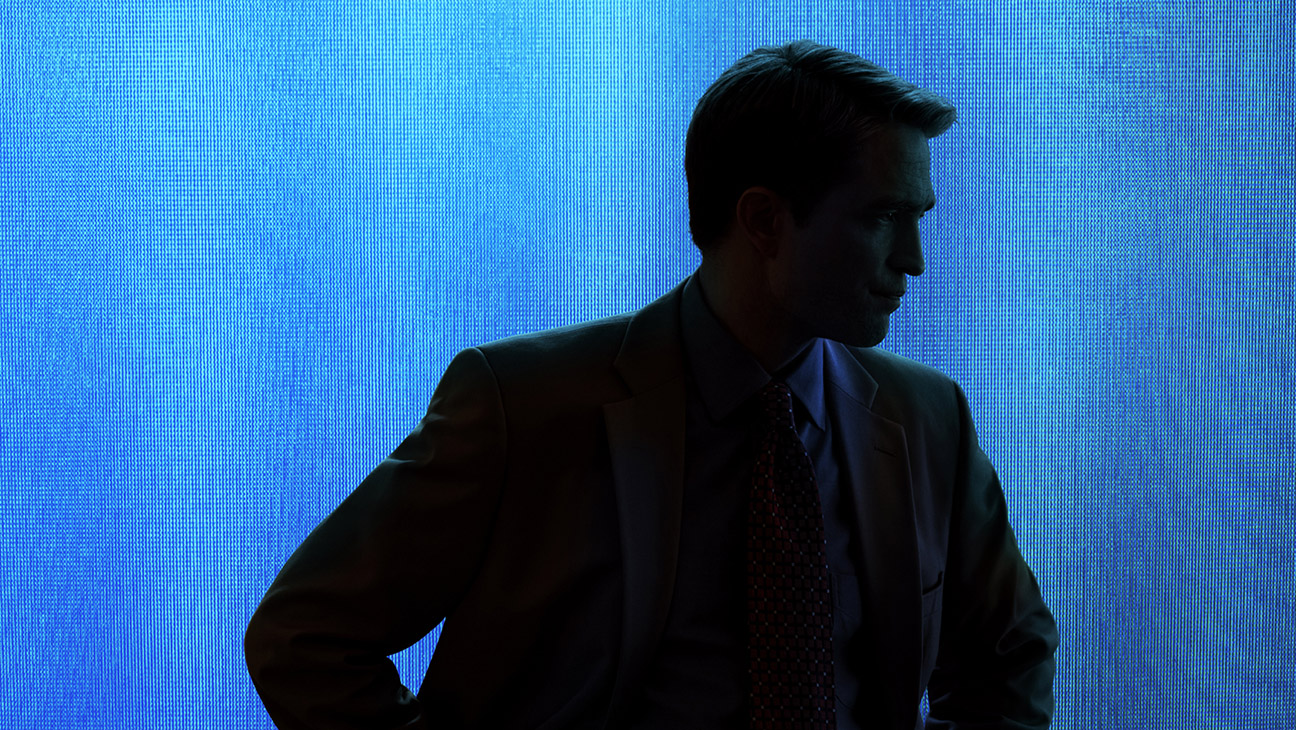
Primetime, the debut directorial feature film from Lance Oppenheim (who you miiight have heard is having a big year doing other things) tees up Pattinson with the opportunity to probe deep into and interpret the psyche of Chris Hansen, the television journalist and enigmatic former host of To Catch a Predator on Dateline NBC. Oppenheim's film has a lot of ideas about a lot of different things: it's a kind of period piece set in the not-so-distant past about a very specific moment in American culture; it's a cautionary tale that sratches at the idea of moral hypocrisy but is leery to not deliver any sort of final verdict; and above all, it's a tousled character study with the kind of wide canvas that invites and empowers an idiosyncratic actor like Pattinson to make a lot of inspired capital A-acting choices.
While I do think the film is successful in going out of its way to challenge its audience, I found Primetime to be, a times, a chore, or even worse, a bit of a bore. Look, I'm all up for a challenge and willing to let the director do their thing and put all my pre-conceived proclivities about what I think the film is going to be through the blender... but it has to be worth it, or at a minimum, for a reason. There are filmmaking elements to appreciate and the film's aim and conceit are admirable, but there's a lot left to be desired about its purpose and execution.
Spoilers aplenty
Primetime wastes no time setting the scene and cleverly starts things off by dropping us right inside of an episode of To Catch a Predator – which for those of you who weren't alive or sentient in 2006, was one of the most-watched and most-talked about television shows of its era. Hosted by Hansen, the show was designed to be a kind of investigative "gotcha" journalism; it involved luring would-be child predators who were expecting to engage in sex with minors to honeypot house as part of a sting operation conducted by the anti-pedophilia watchdog group Perverted-Justice. These adult men would instead meet decoy actors of legal age, and then Hansen and a camera crew would confront them before they were arrested by law enforcement. I know what you're thinking: what in the actual fuck was going on in the mid-2000s? Far be it for me to be the person to try and answer that – in 2005, I was more preoccupied with acquiring Pokémon cards and watching Anakin Skywalker transform into Darth Vader than I was interfacing with any deeper idea about the mainstream media landscape or the social psychology of a traumatized post-911 populace.
To this day, in any respectable resect, I am still ill-equipped to have a meaningful conversation about any of these anthropological notions. Simply stated, I'd argue it's probably easier to describe than it is to truly understand what exactly was happening in American culture and media in the early aughts. Unfortunately, Primetime doesn't really offer any sort of deeper insights either – it's more interested in Hansen as an individual than it is the world around him. That in and of itself isn't necessarily a limitation, but it does narrow the scope for what the film is trying to explore and the themes it is trying underscore. The screenplay for Primetime is written by Ajon Singh, which is an adaption of the Luke Dittrich's book, "Tonight on Dateline This Man Will Die"; having not read book, I wonder how faithful the film stays to its source material and how much of the story had to be retrofitted to make a compelling movie.
Regardless, my biggest issue isn't even really about the film's narrative intention, but instead about the way it looks (the distinct visual language) and the way it feels (the tonal control, or lack thereof). The lo-fi, grainy digital aesthetic just didn't really work for me, even though I applaud the hustle of trying to capture a specific time and place using era-specific filmmaking craft and equipment. It's not that the aesthetic didn't work, it's that they almost worked too well to the point of being distracting. Working with cinematographer David Bolen, who was also the DP for You Can See Everything, Oppenheim gets a little lost in the sauce with this one, and the grit and grime spills gradually undermined what was happening story-wise or performance-wise. I hate to unleash an overworked "style over substance" take here, but that's bascially what was going on. I'm sure others will disagree, but for me, it was a difficult sit.
And I'm not even talking about the difficult subject matter that To Catch a Predator is focused on – which brings me to the way the film feels and the lack of (or complete disregard for) tonal control. There's genre mish-mash at work, a shift between dark satire, a hyper-serious workplace drama, and a warped psychological thriller. I think Primetime doesn't fully come together because of what I said earlier: it has a lot of ideas about a lot of different things. There's surrealist elements at play in the background (which are interesting but mostly shoe-horned in to curry some favor for Hansen with the audience); there's an unclear pathos to the film, an ambiguity between sympathy and condemnation for all its characters (which makes for interesting performances but an unsatisfying story experience overall); and most of all, the film is confident in its attempt to interrogate the ethics of exploitation but takes the chicken exit when it comes to offering any sort of critique or slant. Listen, I often applaud when a film is brave enough to be ambiguous, but if you're going to stick out your neck this far, it's important to put your money where your mouth is.
All this is to say that the film is saved by the power of the performances it is able to platform. Skyler Gisondo's turn as "Decoy Dan" Plum is carefully calibrated and represents the soul of the film; Phoebe Bridgers has limited screen time but is impressive as another decoy, Del Harvey; and Merritt Wever plays Andie Bender, who is a composite character of producers from To Catch a Predator, and provides a spine to the story. But the star, Pattinson, is who I most want to discuss (obviously). I've seen some critics praise this is perhaps his best leading performance – I don't agree with that, but he is certainly worth the price of admission. It's a big performance, a role with plenty of nooks and crannies to explore, where he is top-billed but at times scarcely deployed. When he isn't on screen, Primetime immensely suffers. It's true, Pattinson may be on a 70's Pacino-type roll at the moment, and while their acting styles are often in stark contrast, there's an audacity and fearlessness that is reminiscent of Pacino's eccentricities and gravitational pull. If the best is still ahead for Pattinson, we have a lot to be excited about. In this specific case, Primetime is an underwhelming A24 movie with an overwhelming Robert Pattinson performance holding it together.
Froth
You know who else is on a generational run (besides Pattinson)? Hop Butcher. Every time their beer hits. Every time. It's like watching Jackson Chuorio lead-off for the Brewers in the postseason – no matter who is on the mound, no matter if it's a first-pitch fastball, he is swinging, making contact, and getting on base. I have yet to have an IPA from them that is anything less than excellent, so I'm having a hard time keeping up with all they have to offer. Lord Octopus is a particularly potent variety, super fruity, big mouth feel, and creamy (but not too creamy). It's fantastic. When in doubt, bet on Hop Butcher.


