


Eleanor the OK


Film
Throughout cinema, lies have always had a way of catching up to the liar. Whether it's a long, complicated con like Catch Me If You Can, a humorous and heartwarming facade in Mrs. Doubtfire, or a more devious form of identity theft in The Talented Mr. Ripley, the perpetrator of the lie is always confronted about their falsities. But what makes these interesting films is how they frame the protagonist as someone you don't want to be caught. There's charisma, suspense, intrigue, all the necessary ingredients to make the con so much more interesting than the truth. Eleanor the Great, Scarlet Johansson's directorial debut, attempts to employ this idea, instead using an incredibly off-putting story that drums up feelings more akin to Dear Evan Hansen. Confusion and a sense of conflicting morals that make for an uncomfortable watch for the bulk of the film.
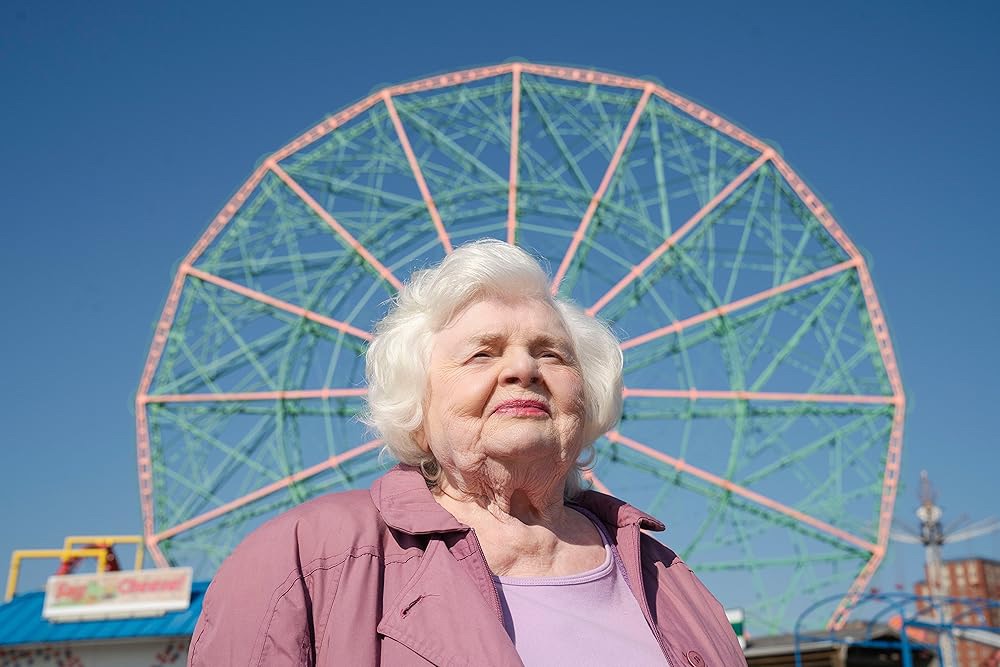
Eleanor the Great follows Eleanor Morgenstein(June Squibb), a 94-year-old woman grieving the loss of her best friend and roommate, Bessie (Rita Zohar). The introductory moments of Johansson's film provide a terrific glimpse into her filmmaking skills as she highlights the touching friendship between the two elderly women, prior to Bessie's passing. Their witty banter combined with the always wonderfully warm and comedic June Squibb sets up the emotionally devastating loss quite well. A cut from the two friends holding hands in the hospital to Squibb's Eleanor sitting alone on their park bench is a profoundly heart-breaking moment that Johansson handles exquisitely.
But the story veers into confounding territory when it gets to the lie that Eleanor begins spinning. Moving back to New York after Bessie's passing, Eleanor accidentally wanders into a Holocaust survivor's support group at her Jewish Community Center-she was supposed to be attending a choir group-and desperate for emotional support, recants a story of her survival experience. Except it isn't Eleanor's story, it's Bessie's. Even knowing what was going to come from Eleanor's wrong place wrong time mishap couldn't prepare you for the shock of watching someone as warm and affable as Squibb lie about something so horrific. The clash between wanting a grief-stricken Eleanor to find the compassion and healing she needs and being appalled at the way she's going about it provides an incredibly confusing experience that lingers throughout the entire film.
When Eleanor the Great sidelines this disastrous plot line, giving way to Eleanor and Nina's (Erin Kellyman), a young journalism student who wants to write a piece about Eleanor's story, budding and unlikely friendship. Their shared grief, Nina recently lost her mother, plays out in such a beautiful fashion that may be overly weepy at times but nevertheless is the strength of the film. Squibb and Kellyman have fantastic chemistry and light up each scene with a kaleidoscope of complex emotions and humor that helps the film feel much more honest in its depiction of the process of grieving.
The final act sees more of this redemptive work as Chiwetel Ejiofor, playing Nina's father whose grown distant since the passing of his wife, delivers a superb monologue filled with heart, giving the film it's most human moment. However, there's probably two to three other monologues that follow that not only provide diminishing returns, but feel like an attempt to overly justify the lie at the center of the film. Instead of relying on the character dynamics and the all-consuming pit of grief that entangles them all, I got more of a sense of empty justification, in turn reminding me of the fabrication that started this whole thing.
Nevertheless, Eleanor the Great did stand out as a sure-handed debut from Johansson in the director's chair, showing strong vision and a knack for pacing that can't be said of everyone's debut. Yet for all of Johansson's technical proficiency and the genuine warmth she draws from Squibb and Kellyman's performances, the film remains trapped by its own moral confusion. Like Eleanor herself, Eleanor the Great gets lost trying to justify the unjustifiable, when it should have trusted the raw, honest power of grief that made those quieter character moments so compelling. In trying to make Eleanor's lie palatable, the film undermines the very authenticity that makes loss and healing so universally resonant. It's a promising directorial debut that unfortunately can't escape the shadow of its own shocking premise.
Froth
I know I recently paired a Fair Isle Brewing beer with Splitsville and I should probably vary my choices a bit, but this one is too good not to use. Behold, Fair Isle Brewing's Eleanor! Pretty sweet, right? Serendipitous naming aside, Eleanor is another one of Fair Isle's featured foraged saison's that boasts a healthy dose of elderberries. Giving it a delightfully tart and dry finish, combined with a touch of oakiness from its barrel aging, this saison is incredibly refreshing. The berry flavor comes through stronger than some of Fair Isle's other offerings, enhanced by its potent aroma which also has a little funk to it, but its a well balanced affair and is quite drinkable.


