


Just Keep Walking


Film
From Suzanne Collins' Hunger Games to Stephen King's The Long Walk (published under his pseudonym Richard Bachman), director Francis Lawrence knows a thing or two about adapting totalitarian regimes and their murderous games. While the visual elements of the two groups of films expectedly vary, The Hunger Games films boast the colorful pomp and circumstance of the extravagant affairs surrounding the games, whereas The Long Walk maintains a despondent, dystopian look; they are inextricably linked through the themes Lawrence focuses on. Lawrence's King adaptation is notably darker and far more sinister than his prior films, yet there's a visceral attraction to his vision. Showcasing human interaction in the face of depravity turns The Long Walk into much more than some survival pastiche, allowing it to organically evolve-with the help of JT Mollner's script-into a hauntingly beautiful portrait of resilience, and a terrifying display of modern horror.
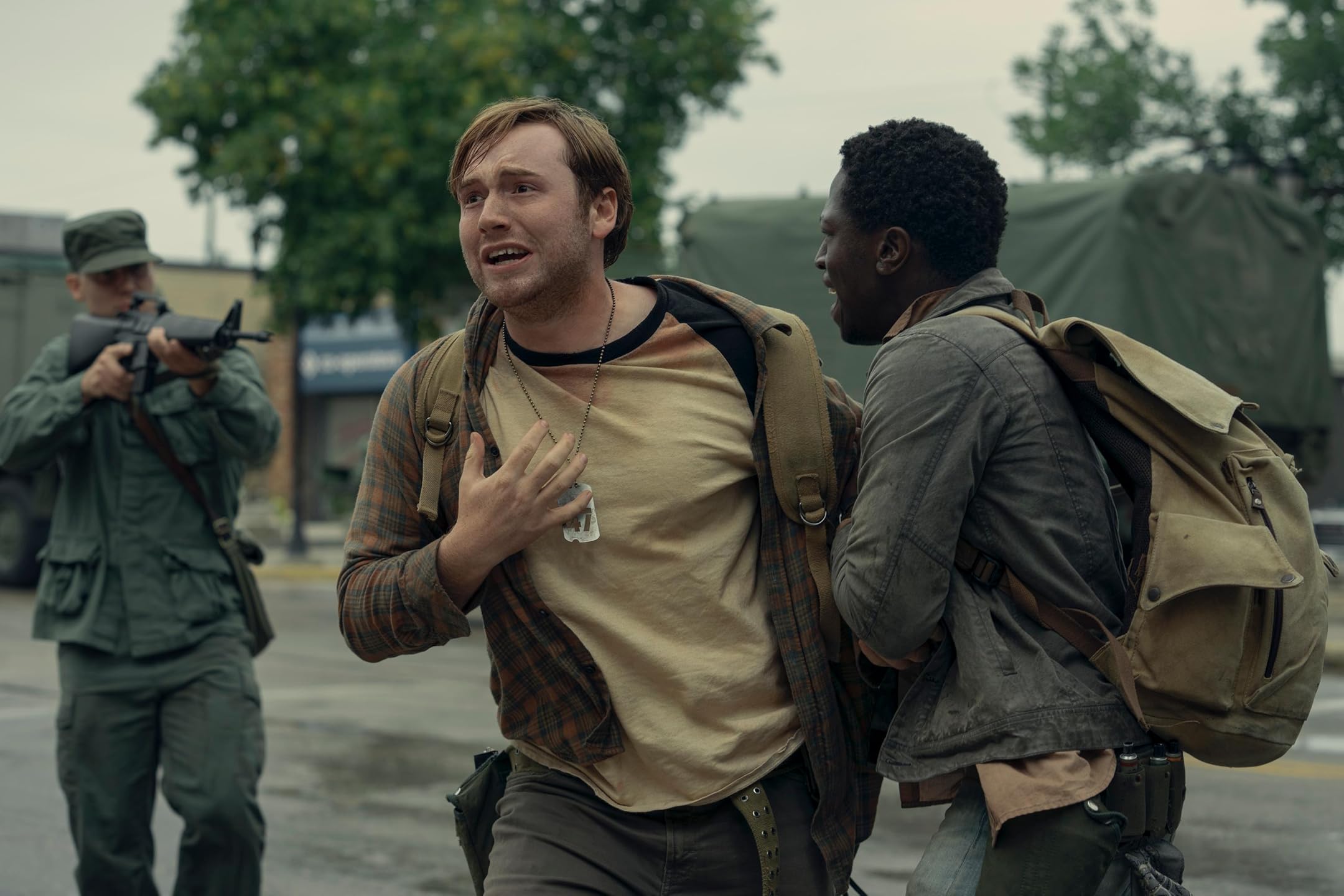
Mollner's script takes a few creative liberties with the central premise of King's work, reducing the total number of contestants from 100 (two from each state) to 50 (one from each state) and lowering the speed the boys need to maintain from four miles per hour to three. Everything else about the competition remains, including the ghastly gunshots for eliminating slow or stopped contestants, and the grand winner receiving whatever they could want. From the starting gun being fired, it's clear the focal point is Ray Garrity (Cooper Hoffman), who, by getting dropped off by his terrified and crying mother (Judy Greer), scores some empathy from the audience. That strong empathetic connection continues, however, as Ray befriends the kind and charismatic Peter McVries (David Jonsson) and the two form a powerful kinship and unlikely friendship with plenty of other contestants. But even as their intertwining relationship evolves, as bonds form among all contestants, the paradox of connection amidst a game built to destroy is soul-crushing.
Lawrence highlights much of the camaraderie between contestants through close-up, often unsteady, camera shots of conversations. The intimate distance to Ray and Peter talking about Ray's mother or Peter's tough upbringing brings us closer to these characters, but the rhythmic bouncing to mirror their walking is a horrifying reminder of the goal at hand. Outlast the person next to you. This grim juxtaposition is a constant presence throughout The Long Walk and enables Lawrence's film to balance a gentle side, these are kids after all, and the grisly brutality enforced by the totalitarian regime looming over the contest.
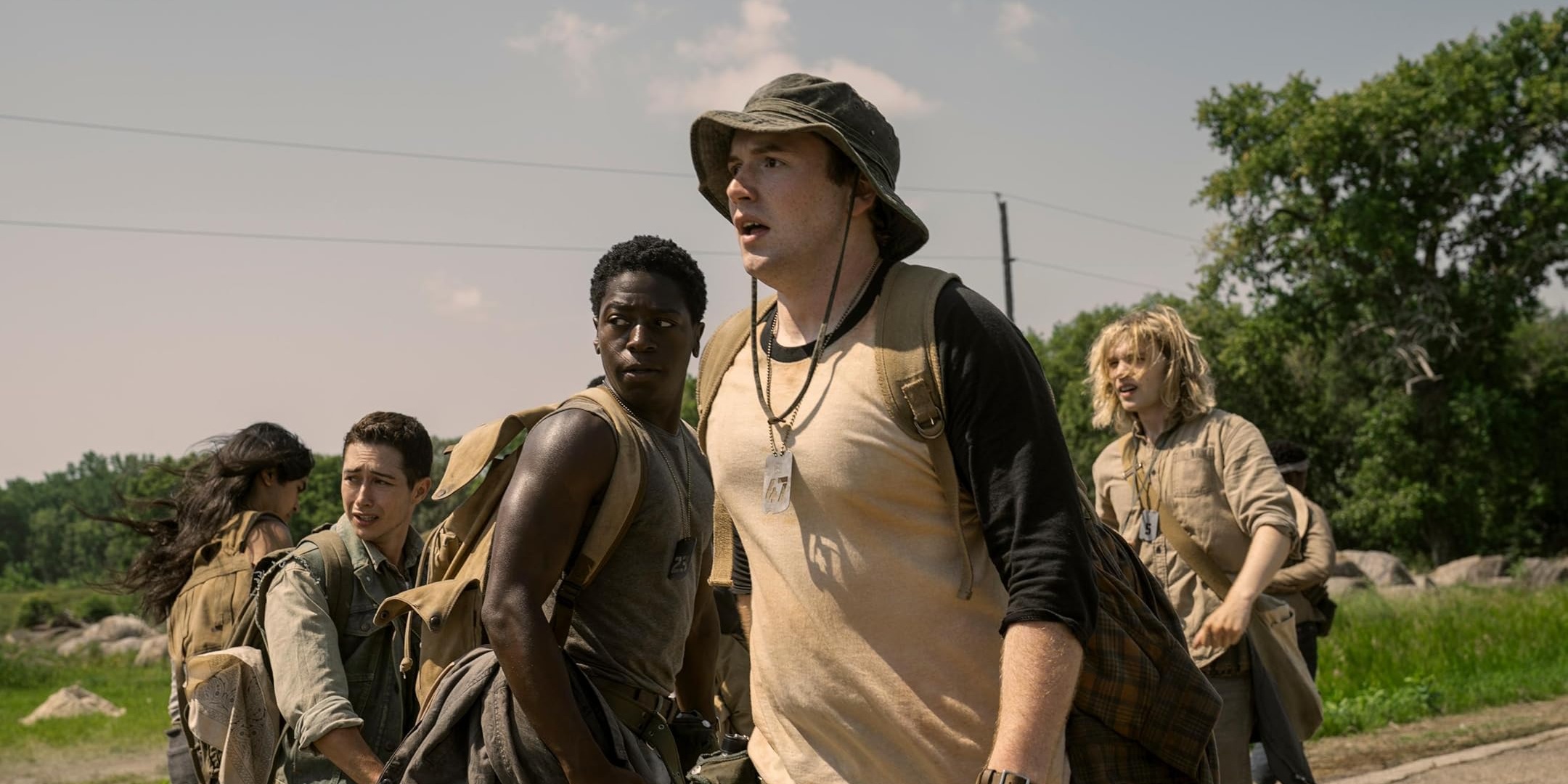
The deliberately opaque nature of the government entity brings a sickly unease. Outside of Mark Hamill's cartoonishly evil Major, whose ability to redirect the boys' ire into gusto is unsettlingly amusing, there's no real vision of the authoritarian state. Mollner fits in a pivotal flashback along with expositional dialogue that works well, but the strength of the adaptation is its lack of explanation. I can't help but think that The Long Walk takes a route similar to Paul Verhoeven's Starship Troopers, as in both opt for suspenseful and mysterious descriptions of the reality surrounding the characters. The mystery of the regime and the necessity of the contest, even if the Major claims it's to motivate the country, paints an exceedingly sinister backdrop to the boys' journey. Combined with the shots of the decrepit countryside featuring run-down buildings, abandoned vehicles (some burning), and seemingly depressed bystanders, the aesthetic of the film shakes you to your core. It feels too real and makes you fill the gaps with your own interpretations, which makes it all the more terrifying.
But the hopeful heart that pushes through, fighting back the darkness, making it such an extraordinary film, is the chemistry and performances of Hoffman and Jonsson. Their connection during the walk feels authentic, making it easy to root for the duo, knowing that someone isn't going to make the finish line. Every layer of them that is peeled back, revealing their beating hearts, brings us all closer, making it easier to rip our own hearts out of our collective chests. A balancing act of light emotion and dark depravity is no small feat, but Lawrence does so with masterful precision, highlighting every possible ounce of Hoffman and Jonsson's revelatory performances, ultimately leading to one of the most soul-crushing endings that perfectly encapsulates the idea and ethos of a dystopia. Lawrence once again proves his capabilities of adapting to such dismal environments and the weaponization of youth, but this time, he's made something horrifyingly spectacular, making The Long Walk a sensational and heart-breaking journey well worth enduring.
Froth
Normally, I would have a dark beer for such a dark film, but there's such a thing as too much dark. Let's just say The Long Walk is dark enough, it shook me to my core in ways I didn't anticipate, but in a way that says this is an amazing movie. So instead of a dark, roasty beer, I went with Single Hill Brewing's Keepers, a double dry-hopped IPA, because why not lean into higher ABV and light refreshing hoppiness? It's a kind of beer that's refreshing, astoundingly delicious, and light enough that you could go for a walk after.
Alright, I hate myself after that one. No more walking jokes.
Nevertheless, Keepers is, as its name would suggest, a keeper. Brewed with Riwaka, Centennial, and Citra hops, this concoction is bursting with citrus flavors. The Centennial and Citra combination gives a nice floral aroma to the brew, while the Riwaka and Citra duo delivers some bright fruity flavors like grapefruit, peach, and a touch of mango. The double dry hopping pulls the sweetness back by adding some hoppy resinous flavors, but the overall IBU is relatively low, around 30, which makes for a lighter and more balanced beer. Overall, I think it's a great light companion to Lawrence's The Long Walk, serving as a little pick-me-up during some of the more treacherous moments.


