


Downton Abbey: The Grand Finale

Film
When Mary finds herself at the center of a public scandal and the family faces financial trouble, the entire household grapples with the threat of social disgrace. The Crawleys must embrace change as the staff prepares for a new chapter with the next generation leading Downton Abbey into the future.
Most franchises don't know how or when to say goodbye – they either leave too soon or keep coming back long after the magic has faded or disappeared. To the delightful benefit of its legion of loyal fans, the creative team behind Downton Abbey managed to serialize the act of saying 'goodbye' and turn it into a full-fledged trilogy. The first film, Downtown Abbey, was a curtain call – a celebratory reunion that brought the gang back together for at least one more bow; Downton Abbey: A New Era was the second film and more of a last hurrah – a bittersweet passing of the torch from one generation to the next; which brings us to the final installment, Downton Abbey: The Grand Finale, the conclusive narrative swan song with the unenviable task of ending a story that was never really about reaching a finish line at all – it's always been about the power of nostalgia, the comfort of familiarity, and the simple joy of one more pleasant visit.
Perhaps the reason Downton Abbey has survived so many farewells is because Julian Fellowes never really built his cozy little world around dramatic endings in the first place. The show always found meaning in the quieter moments between its characters: a private conversation after dinner, watching for someone to return from a window, the feeling of watching a familiar world gradually change in plain sight. Three farewell films is perhaps a bit excessive, but feels less like another victory lap and more like a carefully considered final gathering. To its credit, Downton Abbey: The Grand Finale understands the emotional significance of a proper goodbye, but does make the mistake of prioritizing remembrance over resolution, over-relying on the audience's affection for these characters to generate the emotional impact that the story itself doesn't always earn.
Spoilers aplenty
Downton Abbey: The Grand Finale returns to the Crawley family and their staff as they navigate personal and professional changes in a rapidly shifting 1930s England. Following the loss of Lady Violet Crawley (the late, great Maggie Smith, whose absence leaves an irreplaceable void), the family must adjust to life without the sharp-tongued matriarch who helped define the estate’s identity for generations (as well as the series' soul). Lady Mary Crawley (Michelle Dockery) finds herself at the center of a new challenge when her public reputation becomes a source of concern, forcing her to consider what comes next for both her personal life and her role within the Crawley family. Meanwhile, Robert Crawley, Earl of Grantham (Hugh Bonneville), and Cora Crawley (Elizabeth McGovern) face questions about the future of Downton itself as the old order continues to evolve. Downstairs, the household staff confront their own turning points, with the likes of Mr. Carson (Jim Carter), Mrs. Hughes (Phyllis Logan), Thomas Barrow (Robert James-Collier), and the others considering what their futures look like as the traditions that shaped their lives start to disappear. This last chapter brings the Crawleys and their staff together that is less focused on a single crisis and more on the individual choices that what (and who) will carry Downton into the future.
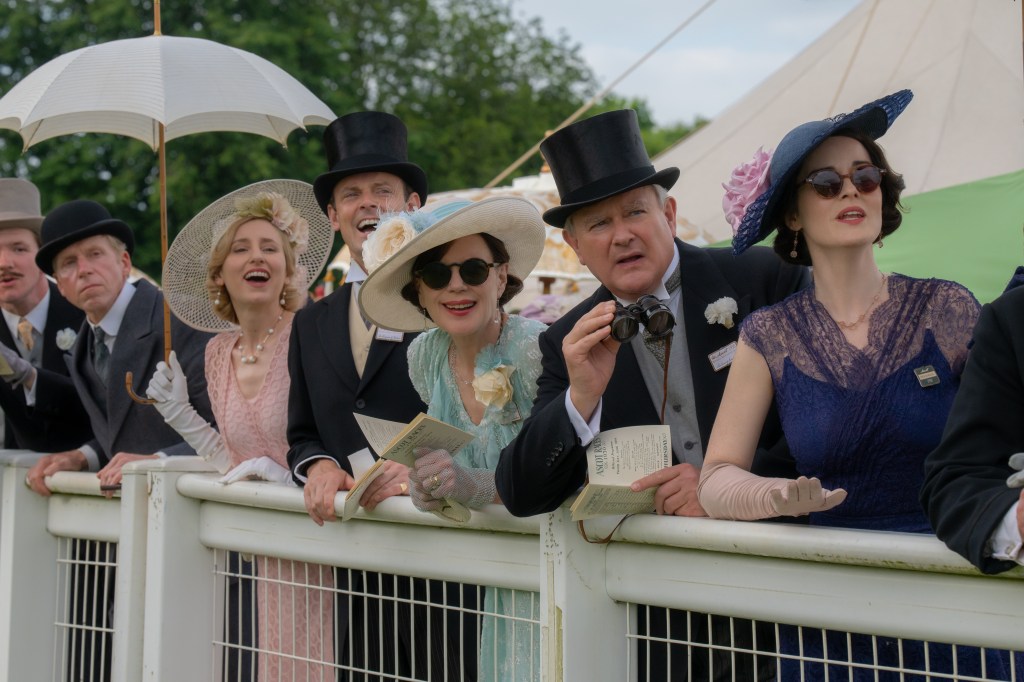
The greatest strength of Downton Abbey: The Grand Finale is also its biggest limitation: it is far more interested in the farewell than the actual finale. Don't get me wrong, the setting still feels inviting and lived in, the character beats feel honest, and the dialogue still feels elegant but shareply observed. But because Fellowes is committed to providing every character with a meaningful send-off, the film is a bit predictable and too carefully constructed – sticking the landing is important but not at the expense of good storytelling. Compared to the first two Downton Abbey films, this film's pacing is slower and more contemplative, almost to the point of being saccharine. While it is nice to hit the brakes and relish the moment before it is truly gone, there is a point where nostalgia is asked to do more heavy-lifting than need be. That isn't to say the poignant moments aren't earned, just a little contrived. Still, like its predecessors, The Grand Finale is an accomplished piece of filmmaking. The production and costume design remain spectacular, the tonal control and visual direction in every frame from Simon Curtis is top notch, and John Lunn's evocative score strings together all the right notes to pluck your heartstrings ever so pensively.
This final chapter in the Downton Abbey trilogy once again confirms that "cozy" and "cinamatic" go together like a spot of a tea in a sunlit drawing room. This series' modus operandi is built on the sheer watachability of two people dressed in period-specific clothing talking quietly in a lavishly decorated room while their hired help waits patiently nearby. Few fictional homes have ever felt this warm and inviting, and while the thought of leaving Downton for good may be sad for some, I think it's fair to say that this final chapter delivered a well-intentioned and thoughtful farewell to cheers all its beloved characters.


