


28 Years Later: The Bone Temple

Film
Dr. Kelson finds himself in a shocking new relationship – with consequences that could change the world as they know it – and Spike's encounter with Jimmy Crystal becomes a nightmare he can't escape.
28 Years Later: The Bone Temple is the fourth installment of the post-apocalyptic horror franchise, intended to be the second part of a planned trilogy and the nearly immediate follow-up to 28 Years Later, (a film we really liked) that recaptured the spirit and dystopia of 28 Days Later from the early aughts. Directed by Nia DaCosta and again written by Alex Garland, The Bone Temple is for those among us who have two wolves inside of them: one wolf is a high-concept, highbrow cinephile aesthete, while the other is a lowbrow, freaky, genre-hungry sicko. To its credit, the film does not compromise any of its weirdness or darkness in favor of catering to one wolf over the other. With its loose-but-sharp storytelling and no-holds-barred filmmaking, The Bone Temple feels more like an artifact of the past than a product of the moment.
Spoilers aplenty
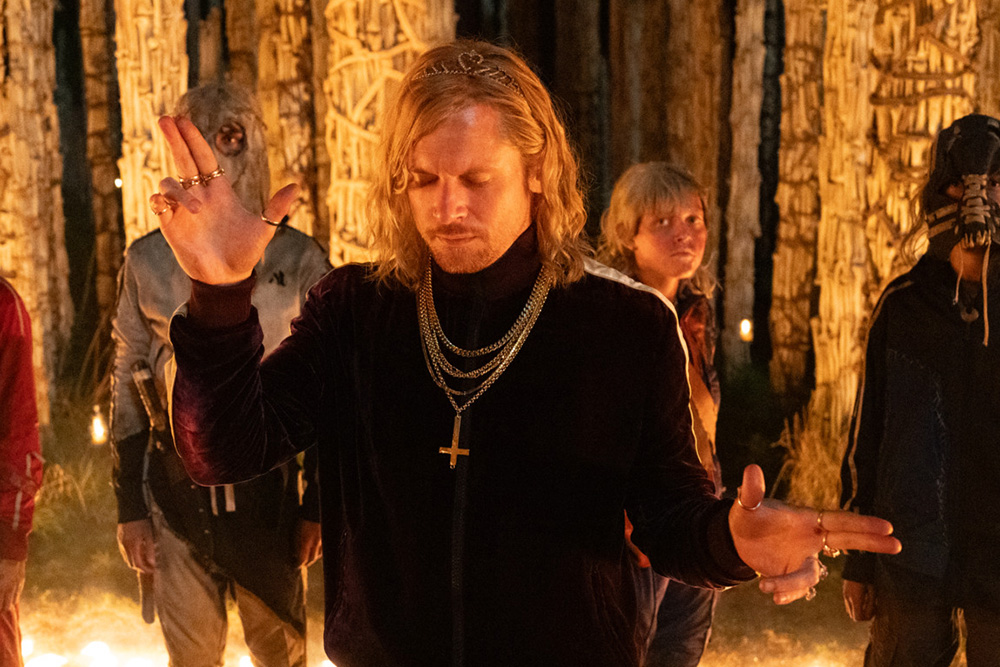
Picking up right where the last installment left off, Spike (Alfie Williams) has been "rescued" (or maybe just "adopted by way of circumstance") by the Fingers, a violent gang of social miscreants donning colorful tracksuits and peroxide-blonde wigs led by their psychopathic Satan worshipper "Sir Lord" Jimmy Crystal (Jack O'Connell), who is on an absolute heater right now. For those of you who haven't seen a film in this franchise before, don't fret, it is reasonable to feel uncomfortable and confused. You'll remember Sir Jimmy from the cold open of 28 Years Later as the young boy who is given a crucifix necklace by his minister father before he is attacked during the initial outbreak of the Rage Virus by the Infected. Now, after 28 years (aha!), with his necklace inverted and his psyche severely corrupted, he leads the Fingers with sadistic rage and forces Spike to kill another Jimmy or be killed by way of a surivival of the fittest death match. The vicious opening sequence sets the tone and establishes the stakes for the rest of the film – if you're new to all this or in case you needed a reminder, the unforgiving world these characters live in is naueastingly brutal and full of gore.
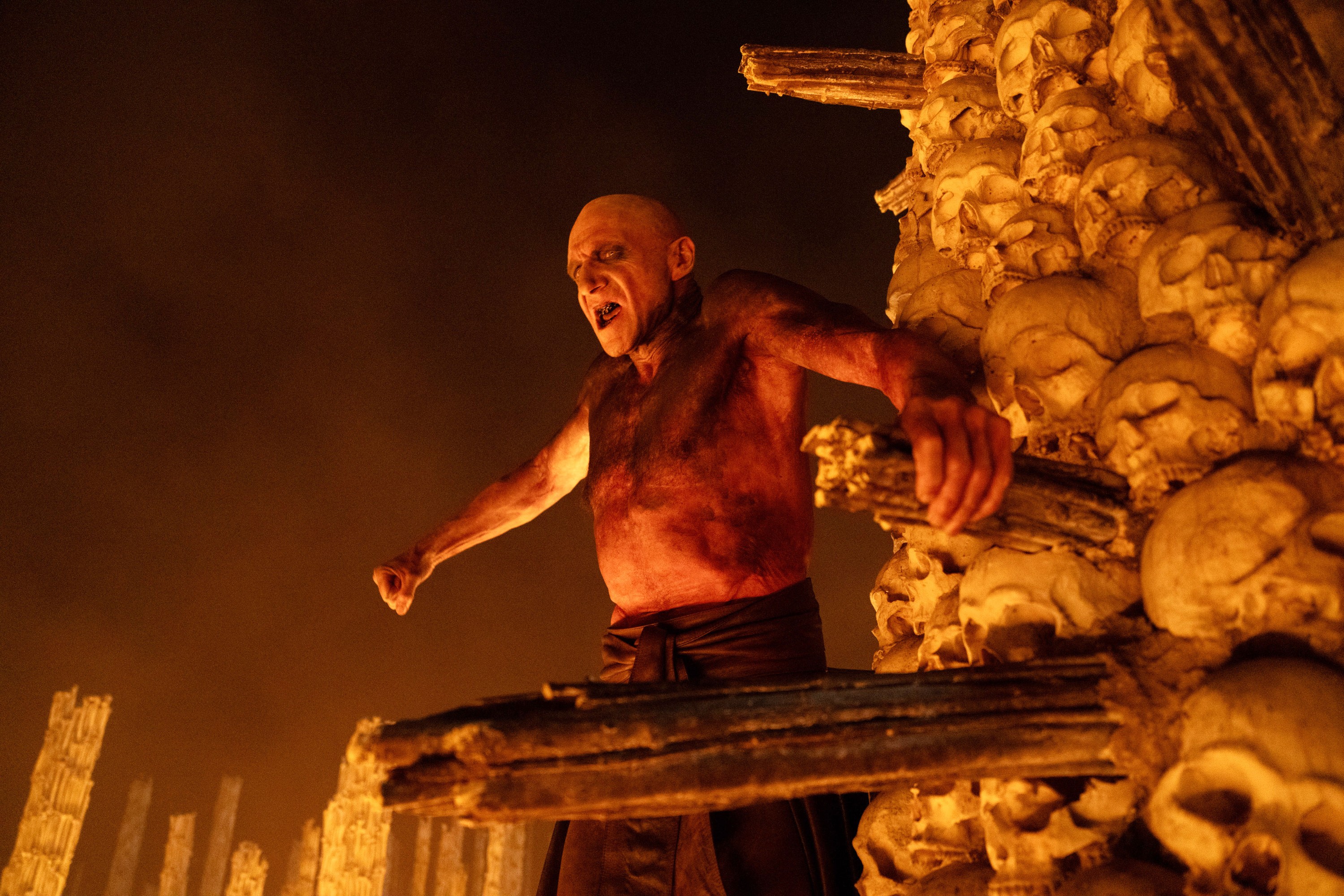
Meanwhile, there's Doctor Ian Kelson (Ralph Fiennes), the former doctor now survivor of the outbreak. Remember him from 28 Years Later? In one of the most moving sequences from any film that was released last year, Kelson performed a ceremonious euthanasia for Spike's terminally ill mother, Isla (Jodier Comer). Afterwards, Spike placed her skull at the top of the Bone Temple, an ossuary Kelson constructed out of cleaned bones to memorialize the victims of the Rage Virus epidemic. Since Spike left Kelson, he continues to spend his days building up the Temple. And then there's Samson (Chi Lewis-Parry), the unusually large and exceptionally well-hung Alpha leader of the Infected (if you don't know, now you know). Since his encounter at Kelson's sanctuary, he has been making repeated visits hoping to get another drug hit from the morphine laced in the darts from Kelson's blowgun. With each dose, Samson has become less violent and his humanity slowly begins to resurface, becoming a friend of sorts to Kelson – kind of like how a drug dealer can be your friend. But also, Samson becomes the subject of Kelson's research, with the hopes of finding a way to treat the Rage Virus.
The groundwork has been laid out nicely for The Bone Temple, which benefits from the detailed and immersive world-building in 28 Years Later. With the characters introduced and the narrative stakes understood, the film has a lot of wiggle room and is granted the opportunity to meander, vibe out, and explore some of the psychedelic nooks and crannies. Many of the film's best moments involve Kelson and Samson interacting, which confidently places a lot of the burden on Fiennes' shoulders as a performer, and he is, as always, up to the challenge. Their time together offsets the paranoia and utter urgency of every scene with Spike, Sir Jimmy, and the Fingers, who pillage and raid other survivors' safeguarded shelters. Despite his adoption in the Fingers, Spike has a moral goodness to him, which Sir Jimmy tests and attempt to extinguish at every turn. Like Fiennes, O'Connell and 15-year-old Williams are great in these parts, as is Erin Kellyman, who plays Jimmy Ink, the one member of the gang who befriends Spike. It's a testament to the tonal comand of the script and the nuanced performances that we get a real sense of who these people are beyond just what is said aloud. Likewise, the film's pacing is also spot on, effortlessly moving between the two primary subplots without ever staying in one place too long, a credit to the editor Jake Roberts.
There's plenty of story to unpack that I'd rather just dangle than unpack now. While it remains somewhat unclear if a sequel toThe Bone Temple will get greenlit, I think it would be a disservice to the writer, Garland, and the directors from both films, Boyle & DaCosta, to not give the audience an opportunity to tie up the loose ends of this story. It is no simple feat to reboot a franchise and evolve it twice over, but that is precisely what happened across these two films. There's certainly reason for Sony to be skeptical that it would be financially viable to run it back again, but isn't this a clear case where a premium should be paid for creativity? One must believe that there will be enough Spider-Man: Brand New Day money to cover the costs here. Hopefully, they do decide to make another one, and I would be thrilled if DaCosta is at the helm. Allowing her the creative liberty to breath some fresh air into this film was the smartest thing the producers did when conceiving this project. I'll understand if they might want to do that again and take a chance bringing in another director to keep things fresh, but I think there is a lot of risk in that. If DaCosta were to return, I feel completely confident in her ability to wrap everything up nicely. Though The Bone Temple isn't for everyone and not every single aspect of the film is without flaw, there is more to applaud than to knock. It's a film that makes you feel, both pain and hope, and much like its predecessor, it has a strong point of view and a lot to say. This series deserves a proper conclusion.


