


Hamnet


Film
The powerful story of love and loss that inspired the creation of Shakespeare's timeless masterpiece, Hamlet.
Often, great art is born out of great suffering. Hamnet, the new film from Chloé Zhao, loveingly adapted from Maggie O'Farrell's novel of the same name, is a film about grief, what it means to experience it and how to live with it. Presented as a kind of familiar, prestige-y, Oscar-baity film directed by a recent Best Director/Best Picture winning filmmaker in Zhao, and starring two of the best young actors Ireland has to offer, Hamnet is without question one of the most highly anticipated films of the year. I'll admit, I had my guard up going into this one – any film that proclaims to capture William Shakespeare, the person, does so at an immediate disadvantage. While the playwright's stature looms large and his is legacy is vast, the man himself is one of history's great blind spots – we know the stories and words Shakespeare left behind far better than we know anything for sure about the person who wrote them.
What makes Hamnet a triumph is that it is not truly about Shakespeare, his grief, his wife Agnes' grief, or even about how the most severe grief renders the most resonant art. Instead, the film is interested in something even more profound – it's about what art has the power to do once grief has arrived, how it reaches beyond the individual experience of loss and brings together others experiencing a similar suffering – and how in that moment of shared recognition, it can provide a moment of connection, catharsis, and communion, the type of healing that can only come from truly great art. Hamnet is a truly great piece of art.
Spoilers aplenty
The narrative building beats and blocks of Hamnet are simple enough to explain but almost impossible to describe. Does that make any sense? It's like providing a detailed account of the sun (yes, Earth's sun) – you can try and describe the sun, how it functions, and what it means to the solar system it reside in. But you can't really express what the sun means or what it's like to feel its rays and warmth. For the sake of trying to get where we want to go, let me set the stage (like I'm sweeping up the Global Theatre after a midday matinee) with a few key plot points.
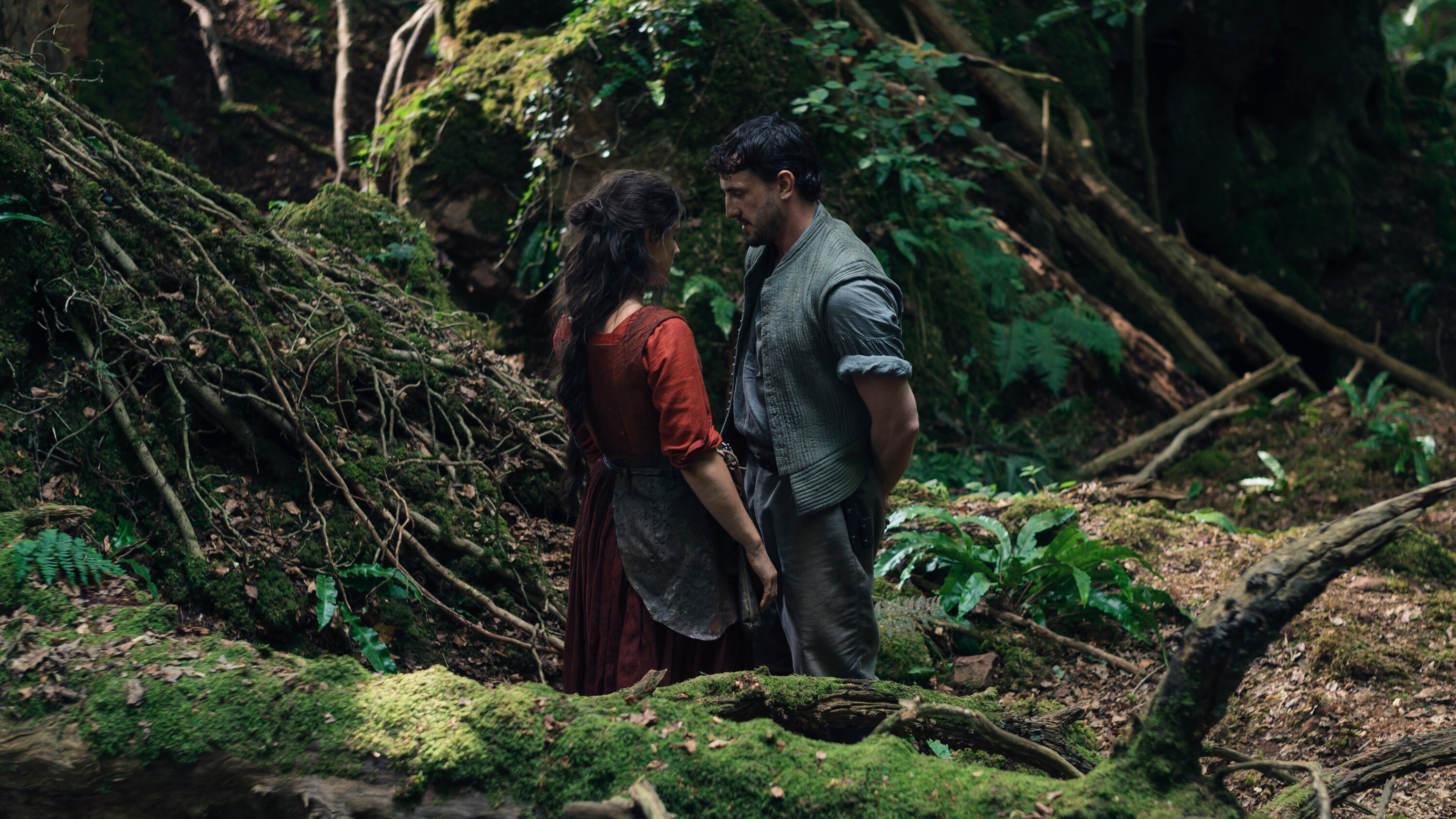
Agnes (Jessie Buckley) – who is something of a forest witch herself – and William Shakespeare (Paul Mescal) – who's a bity angsty, the kind of budding-but-not-ready-to-bloom genius in the making – meet in Stratford, quickly fall in love, and consummate their relationship (those crazy kids getting after it in 16th-century England). Agnes' family disowns her (such class-sensitive prudes back then); the couple quickly marries and welcomes their first child, Susanna. They begin to build a life together, but Billy Shakes has a mean case of writer's block (which is extremely relatable and reasuring – even the GOAT apparently had trouble putting pen to paper). He takes off to London to lock in, leaving a pregnant Agnes in Stratford. After one of the more traumatizing birth sequences I've ever seen put to film, Agnes gives birth to twins, Hamnet and Judith – the latter seemingly stillborn, before she miraculously awakes in Agnes' arms. After this scene concluded, I was fully convinced that Buckley will win Best Actress at next year's Academy Awards. This is one of the best acting performances put to screen in some time.
In this rendition of the Shakespeare family, it's worth mentioning again that Agnes possesses a kind of "spiritual flair." She has an uncanny intuition for the natural world, seems to have a second sight, and practices herbal lore (which you can imagine her neighbors were big fans of during that time). She has a hawk she can summon, her mother was a forest witch who taught her herbal lore, and she has the sight to anticipate the future. I'm not going to dive into anymore of those details, since the film does a great job of infusing these aspects into its core themes and thesis (a credit to the brilliant adaptation of the source material from O'Farrell and Zhao).
It's not long after that the true heartbreak begins for the Shakespeare family. Assuming you don't already know what happens, I'm going to pause here and leave those reveals unrevealed for your own discovery – I'd rather let the film split your heart in half than be responsible for that. For those who are familiar or would rather pre-cope the devastation, please know I warned you in advance...
Judith, the eldest daughter, contracts the bubonic plague, and as she's declining, Hamnet (Jacobi Jupe), her younger brother, lies beside her, and says that he wants to take her place and trick death. And while Judith does recover, Hamnet falls gravely ill and dies the next morning. There's no easy way to talk about this scene – it's utterly heartwrenching. The film's middle section shows the decay and fallout from this trauma; William disappears into despair, Agnes is hollowed out and can barely function, and it seems like there's no way through the darkness. Before the film's final sequence, we see Shakespeare, buried in his depression and on the brink of suicide, conjure his most famous monologue from what will eventually become his most famous play.
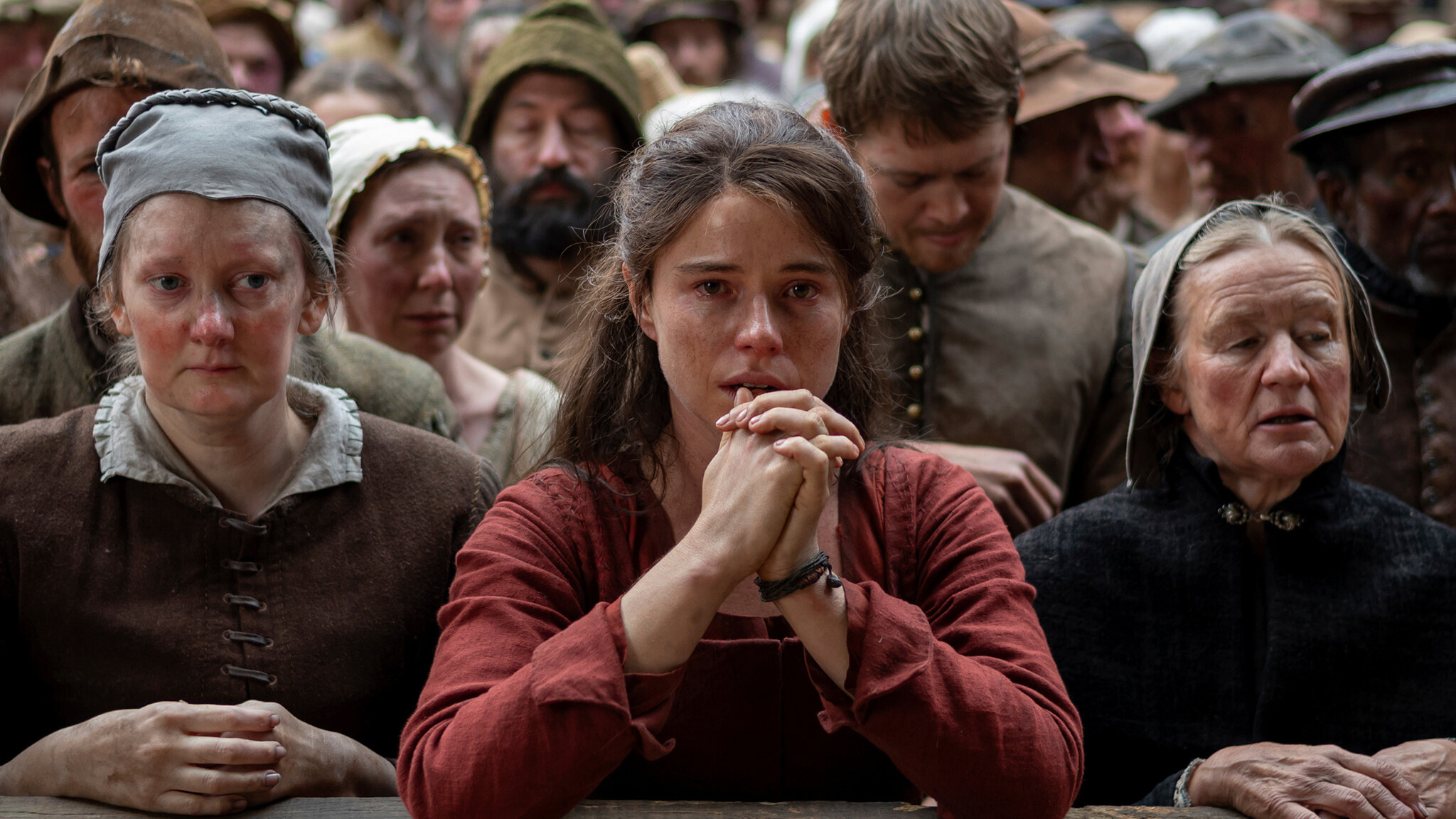
The last 30 minutes of Hamnet is what you might call "movie magic," the kind of thing scene that a filmmaker is lucky to have once in their career: Agnes attends the first performance Shakespeare's new play, Hamlet, at the Globe Theatre in London. With each passing scene, Agnes comes to fully understand what it means that William wrote this as a tribute to their late son. There's so much beauty and symmetry baked into every moment of this sequence. There's a scene between Hamlet and his father that mimics an old memory between William and Hamnet. And then, when Hamlet dies, Agnes reaches out for the actor's hand, which the rest of the audience also does in turn – the way Agnes reaches out reflects how she held William's hand when they first met. But the icing here is the note-perfect decision to cast Noah Jupe as the actor playing Hamlet, who is of course the older brother to Jacobi Jupe, who plays Hamnet, in real life. There's something almost supernatural seeing the Jupe brothers playing these two complementary parts, and the way in which Agnes processes her husband's artistic creation and naked vulnerability makes for a transcendent moment.
Hamnet, for all that it accomplishes, is not a film without flaw. It's a film that is emotionally direct if not a bit manipulative, void of much subtlety to the point of being heavy-handed. Listen, I understand there's probably no other way to tell this story and deliver THAT ending without telling the story a certain way; put differently, what makes the film great is so many ways is also the primary criticism you could offer – Hamnet is engineered to extract your tears, regardless of whether or not it earns them (spoiler, it earned a lot of them from me).
That said, I still believe in the power of Hamnet. It's a deeply felt and beautifully constructed proclomation about the power of a good story and how a good story can bridge the emotional distances between broken people in a unifiying way. Art cannot cure, nor can it bring back who or what has been lost. But it can absolutely help heal. Again, Hamnet is truly a great piece of art.
"The rest is silence."


